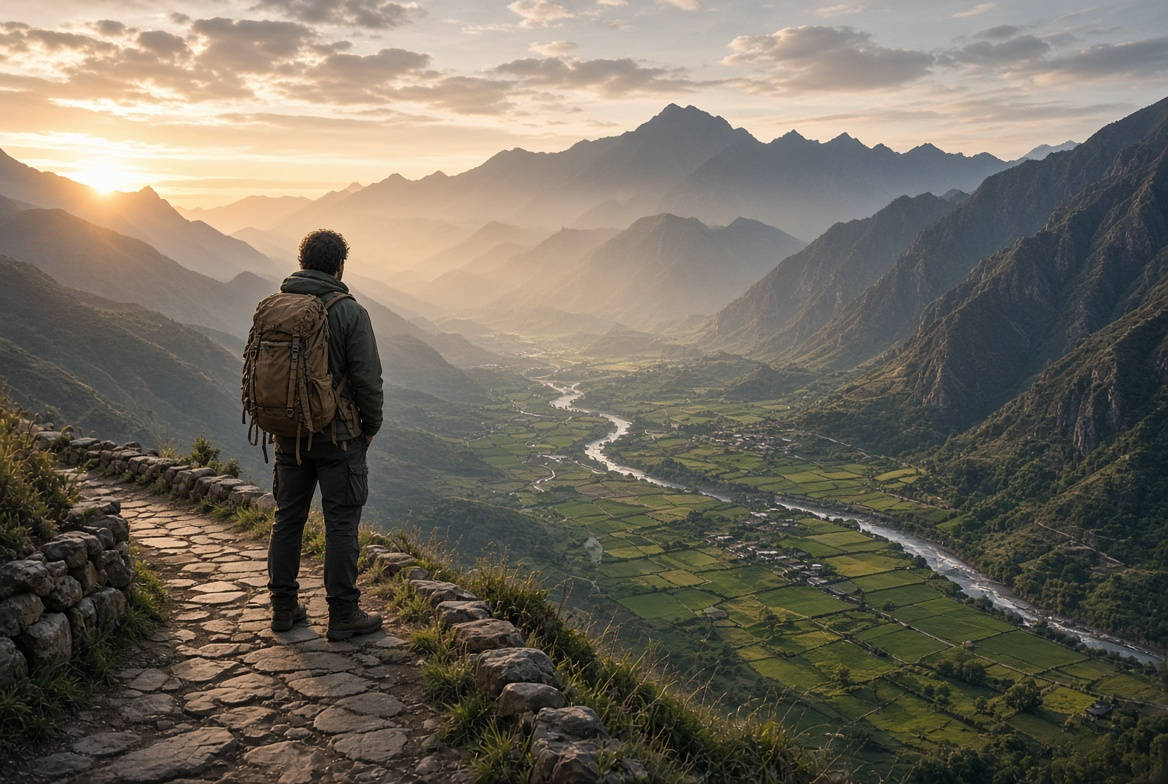
Traveling alone to an ayahuasca retreat in Peru is what roughly 60% of our guests do. Not with a partner, not with a friend, not with a group.
So yes, you can come by yourself, and if you do, you’ll be in the majority. Arriving solo isn’t the brave version of this. It’s the default.
This article covers what nobody writes about: what the US government says about coming here, what happens between the airport and your bed, and the question you’ll ask yourself at 3am on the second night.
I’m skipping visas and general Peru travel tips. Other sites do those well. This is about arriving alone at a plant medicine retreat, specifically.
Why So Many People Come Alone
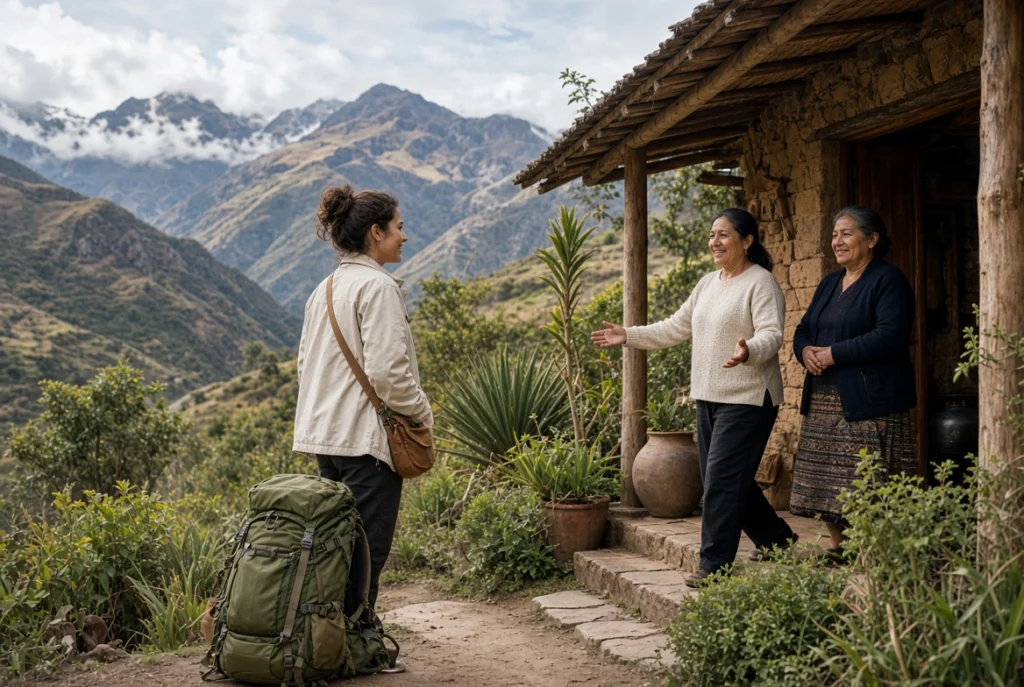
Most people come alone because the thing they’re carrying is private. Our booking records split at roughly 60% solo, 22% couples, and 18% friends arriving in twos and threes.
The reasons cluster. Depression and anxiety account for about 30% of applicants. Trauma is another 20%. Grief is 14%, which runs higher than most centers report, and I think that’s because we’re open about the fact that this place exists because my younger brother died and I didn’t know what to do with it.
Grief is a bad thing to process next to someone who knew the person.
That’s the mechanism behind the 60%. It has nothing to do with a philosophy of solo travel. Most people don’t want a witness from their old life in the room while they take the thing apart.
Does Traveling Alone Actually Deepen The Work?
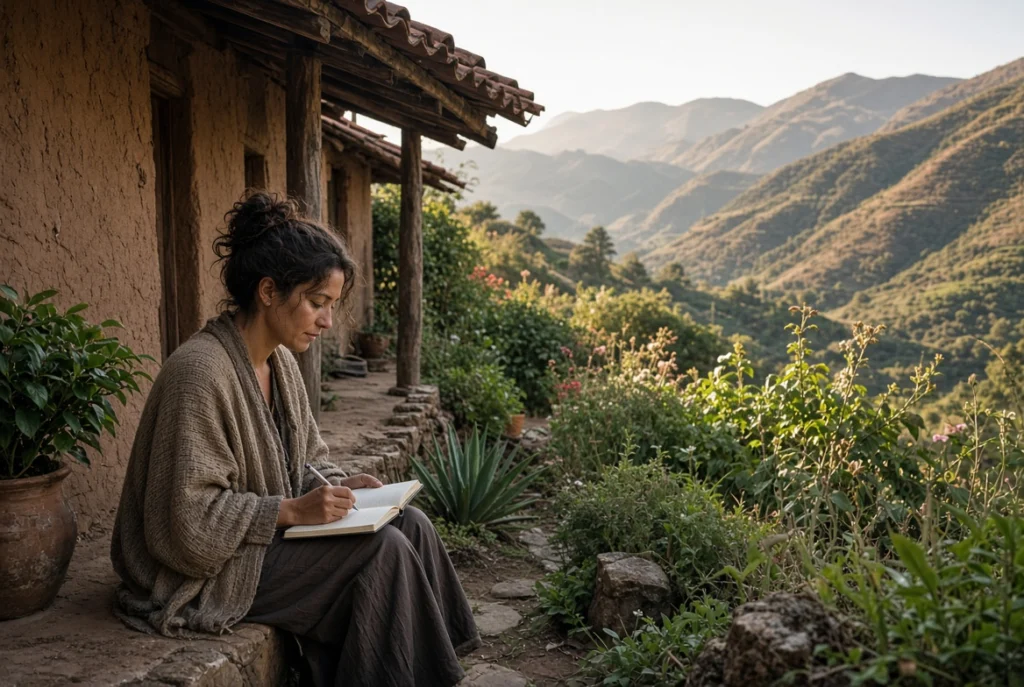
Probably not, and the industry oversells this one. Coming alone removes a distraction. It doesn’t add a benefit.
You’ll read plenty of pages telling you that solitude opens something up. I used to write that way too. Then I watched 2,100 guests come through and the pattern didn’t hold. Some of the deepest work I’ve seen happened to a man who came with his daughter.
Let me correct that framing, because it’s still not right. The variable isn’t whether you come alone. What matters is whether the people running the place screened you properly and stayed within arm’s reach at 2am. Everything else is atmosphere.
Where coming alone helps: you won’t manage anyone else’s night, and you won’t compare. Comparison in ceremony is corrosive and it happens most between people who arrived together.
Where it hurts: nobody there knows your baseline. Nobody notices you’ve gone quiet in a way that isn’t like you. That’s a real cost and most centers won’t name it. We handle it with staffing, not reassurance. For the argument running the other direction, we wrote a separate piece on bringing a family member into ceremony and where that goes wrong.
Is Peru Safe For Solo Travelers Right Now?
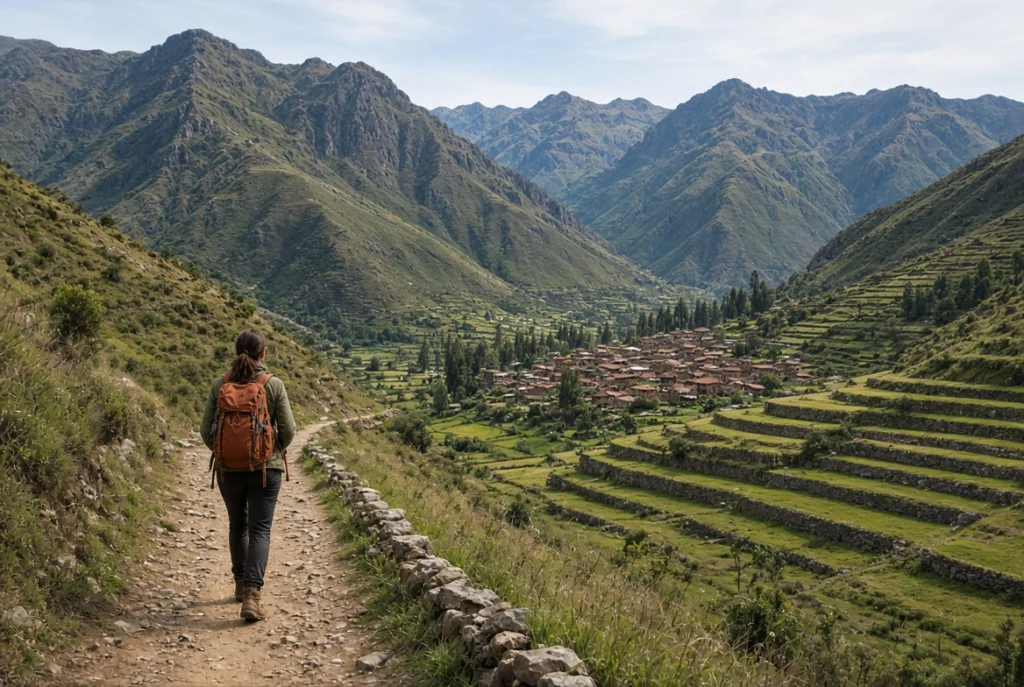
Peru is rated Level 2, “exercise increased caution,” on the US State Department scale, and the Sacred Valley carries no separate warning. France, Italy and Spain are all rated at that same level. Two areas of Peru carry a Level 4 “do not travel” designation, and the Sacred Valley is not one of them.
The State Department’s advisory for Peru names the 2 restricted zones: the Colombia border area in Loreto, and the VRAEM valley. It then clears our area by name, stating that “the city of Cusco and popular tourist sites nearby, like the Sacred Valley, the Inca Trail, and Machu Picchu, are not located in the affected area.”
I’d rather quote that than paraphrase it. It’s the most useful sentence a solo traveler can read before booking.
Now the part most retreat websites leave out. That same advisory tells Americans not to use ayahuasca. It says US citizens have suffered serious illness and in some cases died, and that they’ve been sexually assaulted, injured or robbed while under the influence.
I won’t argue with it. It’s accurate, and it describes something that happens in this industry every year.
What it describes is unscreened people drinking with unvetted strangers in rooms nobody supervises. Every risk on that list is a supervision failure, not a plant. The answer isn’t to tell you the warning is overblown. The answer is to show you the screening, the staffing and the medical cover, then let you check whether a center has them. The checklist further down is how to run that check on anyone, including us.
For scale, Peru recorded 4,157,469 international visitors in 2025, according to figures the Ministry of Foreign Trade and Tourism published in Peru’s official state gazette. Almost all of them went home fine.
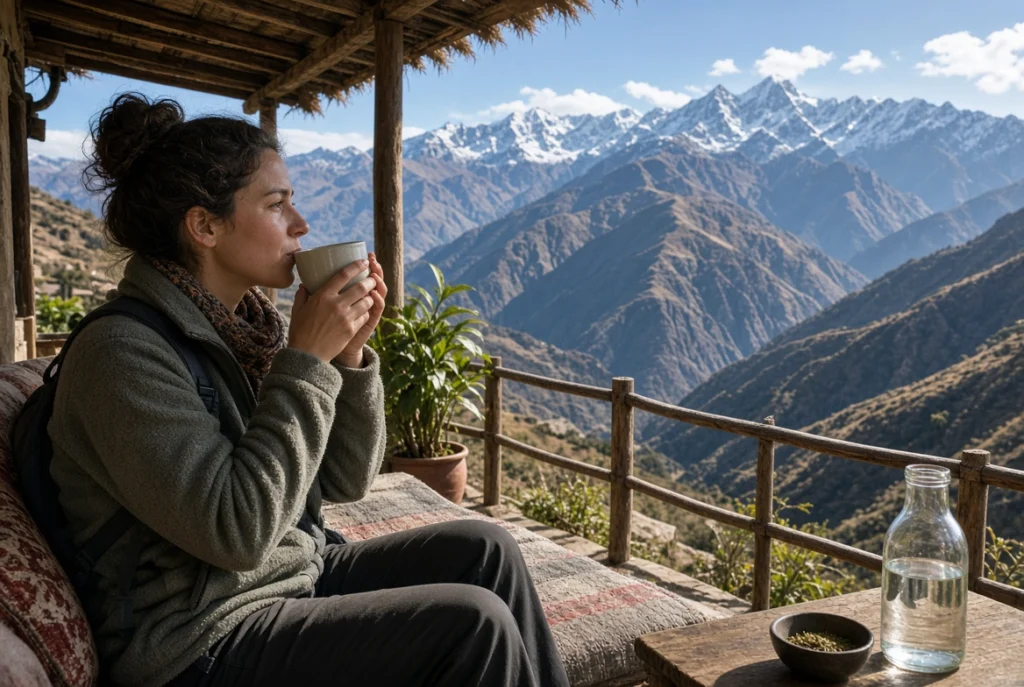
The Risk Nobody Warns Solo Travelers About At 3,100 Metres
The thing most likely to go wrong in your first 48 hours isn’t crime and it isn’t the medicine. It’s altitude, and traveling alone makes it worse, because nobody is there to notice you’re deteriorating.
Our center sits at roughly 3,100 metres. The CDC’s guidance on high-altitude travel reports that 25% of visitors sleeping above 2,450 metres at Colorado ski resorts develop acute mountain sickness. It advises against climbing to a sleeping altitude above 2,750 metres in a single day, and notes that acclimatization runs over the first 3 to 5 days.
Read that against a normal booking. You fly from sea level, connect through Lima, land in Cusco at 3,400 metres, and someone drives you straight to a retreat. That’s the exact ascent profile the CDC tells you not to do.
What we require instead costs us bookings. You arrive in the valley at least 36 hours before the retreat starts. The first 2 days have no ceremony at all. On Day 1, Dra. Carmen Rojas Vargas takes a pulse oximetry and blood pressure baseline on every guest. Oxygen is on site. She’s present for every ceremony, not on call.
We’ve had 3 cases of moderate altitude sickness during acclimatization and none escalated. Before we built the protocol in our first year, one guest went to hospital on Day 2 without ever drinking.
For the elevation numbers compared properly, we broke down why Písac sits lower than Cusco and what that does to your first night’s sleep.
Sacred Valley Or Amazon, If You’re Coming By Yourself
| Sacred Valley (where we are) | Amazon lowlands | |
|---|---|---|
| Getting there | 40-minute drive from Cusco airport | Domestic flight, then road or river |
| Malaria risk (CDC) | “Insignificant” | Present below 2,500 m, all rainforest |
| Yellow fever shot (CDC) | Generally not recommended | Recommended for Loreto and Ucayali |
| Main physical risk | Altitude, first 3 days | Insect-borne illness, heat |
| Time to a hospital | About 45 minutes by road | Often 1 to 2 hours, sometimes by boat |
That malaria line matters more than it looks. Antimalarial drugs are a screening problem with this medicine, so the standard Amazon prep creates a conflict that doesn’t exist up here. Both rows come from the CDC’s country guidance for Peru.\
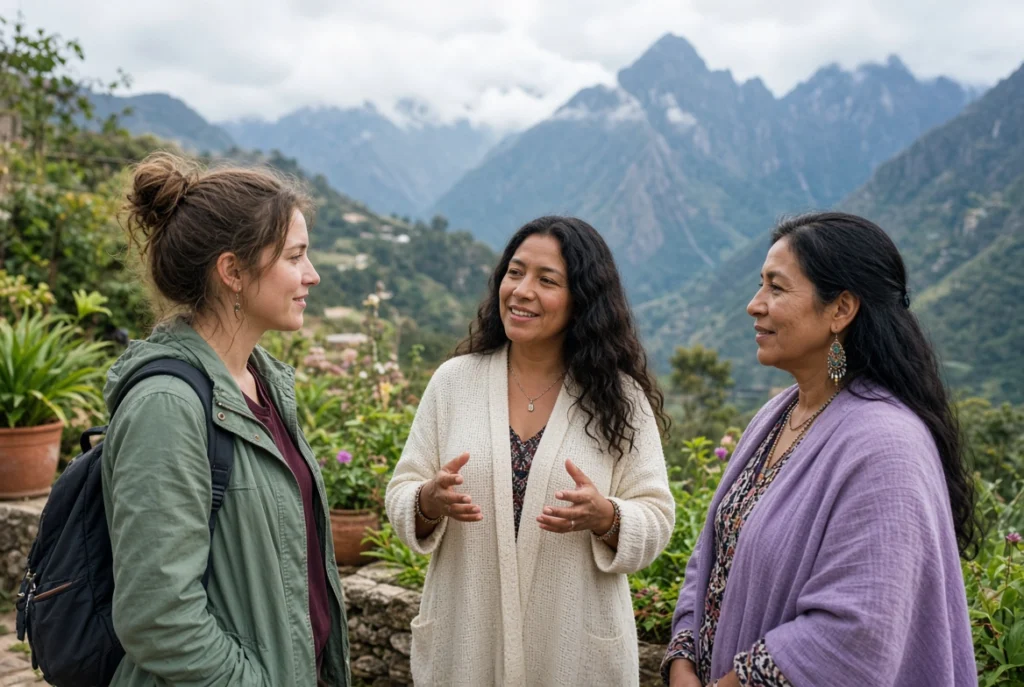
Is It Safe For A Woman Traveling Alone?
Two women are in the ceremony room every night, by policy, and neither is optional. Women make up 45% of our guests and most of them arrive by themselves.
I’d rather give you the policy than the reassurance. Every center says its guests feel comfortable and none of them define what that means.
Maestra Isabel Quispe Condori is one of our 3 healers. Laura Sinclair, our head facilitator, is a registered psychotherapist trained in somatic experiencing, IFS and EMDR, with more than 650 hours of ceremony facilitation. Both are present every night. That’s the floor, not the average.
Staff romantic or sexual contact with a guest means immediate termination, and the ban runs 90 days past the end of your retreat. Every staff member signs it. To report something, you go to Laura, or to me if it involves Laura, or straight to Dra. Rojas if it involves me. Her contact details are in the welcome packet before you arrive, not handed out on site.
Across 9 years and about 2,100 guests: zero misconduct incidents.
That reads like marketing, so use the version you can act on. Ask any center for the written policy, the reporting chain, and the third channel if the complaint involves the owner. If they can’t answer it in one email, you have your answer.
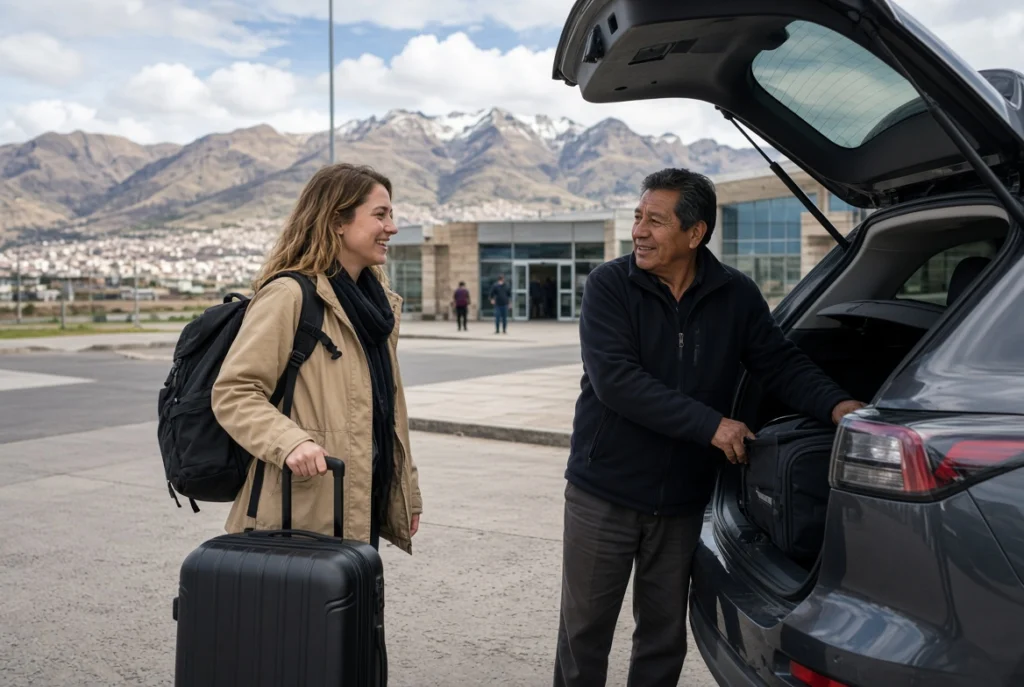
What Happens Between The Airport And Your Room?
Nothing is left to you. Someone from the center meets your flight, and the drive to the retreat is about 40 minutes on road, with no boat and no second flight. Solo travelers are never asked to find their own way up.
The sequence, in order:
- You fly into Cusco. Most people connect through Lima, about 1 hour on the domestic leg.
- Land at least 36 hours before the retreat opens and sleep in the valley, not in Cusco. Lower is better for your first night.
- A center vehicle collects you. We confirm the driver’s name by message before you fly.
- You’re driven to the property, roughly 40 minutes.
- Phones go into a locked box on arrival. You get 30 minutes back on Day 6, and emergency messages reach you through my phone at any hour.
- Day 1 is medical baseline, coca tea, a slow walk, and no ceremony.
Solo travelers push back hardest on the phone policy, and I understand why. You’re alone in a foreign country and we’re taking your only line home. The line still exists. It runs through a person instead of a screen, and it’s staffed at 3am.
If you’re building the trip around other stops, we mapped out the arithmetic on fitting ayahuasca and Machu Picchu into one trip. Most people allow far too few days.
Do You Need To Speak Spanish?
No. Everything you need to understand happens in English.
Laura and Diego Mendoza both work in English and Spanish, and Diego also speaks conversational Quechua. Your screening call, your preparation materials, both integration circles and all of your follow-up calls are in English.
The icaros aren’t, and won’t be. Tomas sings in a mix of Shipibo and Quechua. You’re not meant to follow the words.
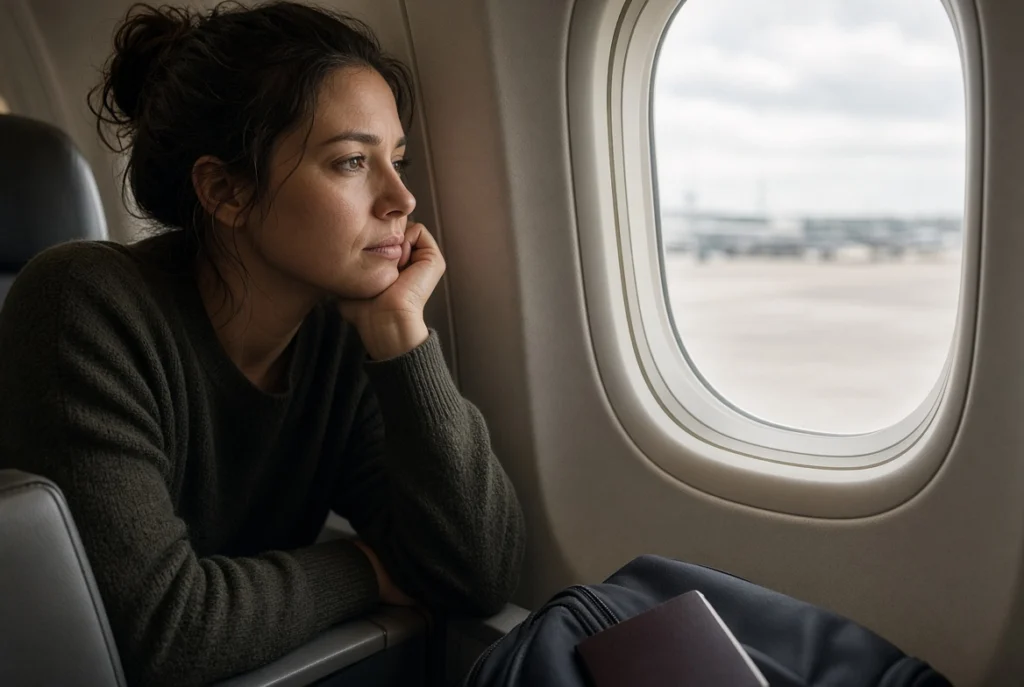
Feeling Nervous Before You Fly Is The Normal Response
Nerves in the week before departure are so common that we’d worry more about their absence. Laura tells people that fear is an accurate reading of the situation, not a sign you shouldn’t come. You’re about to hand over control, in the cold, in the dark, at altitude, in a country you don’t know.
Nerves and a bad fit aren’t the same thing, though. If you’re in active crisis and need stabilizing rather than opening, this is the wrong room, and a good center will say so during screening instead of taking your deposit.
How To Judge A Retreat When Nobody Is Checking Your Thinking
Traveling alone means no second opinion. Use questions with numbers in the answers, and treat a vague reply as the reply.
These 5 work on any center, and I’d rather you used them on us than took our word for anything.
Who Reads Your Medical Form
A named physician, or nobody. Ours is reviewed by Dra. Rojas within 72 hours, and guests over 50 or with any cardiac history submit an ECG and bloodwork. We reject 13% of applicants outright and another 6% to 8% never clear their conditions. A center that accepts everyone is not screening. Medication interactions are where most of this lives, and we covered what the research says about SSRIs and ayahuasca separately.
How Many People Are In The Room?
Ask for both numbers, guests and staff. We cap at 12 guests with 5 staff in the room: 3 healers and 2 facilitators. That works out to 1 staff member per 2.4 guests. If a center gives you a guest number and no staff number, ask again.
Who Is Awake At 3am
Somebody should be within arm’s reach of every mat all night, and you should get their name and training before you book. Ceremony here runs from about 7:15pm to 3am, which makes a ceremony night a partial sleep-deprivation event by design. We wrote up what ayahuasca does to sleep and why the research on that surprises people.
How Far Is The Hospital?
In minutes, by road, with a vehicle on site. Ours is about 45 minutes, with a car parked at the entrance and keys accessible through every ceremony block. We’ve used it once in 9 years.
Who Calls You After You Go Home
Solo travelers skip this question and regret it. You’ll fly back alone to the life that sent you here. We call at Week 1, Week 3, Month 2, Month 6 and Month 12, and about 85% of guests take the Week 1 call. There’s a 4-hour WhatsApp response commitment and an alumni group of roughly 350 people. The re-entry problem is real enough that we gave it its own article about the month after.
Traveling Alone For An Extended Plant Dieta
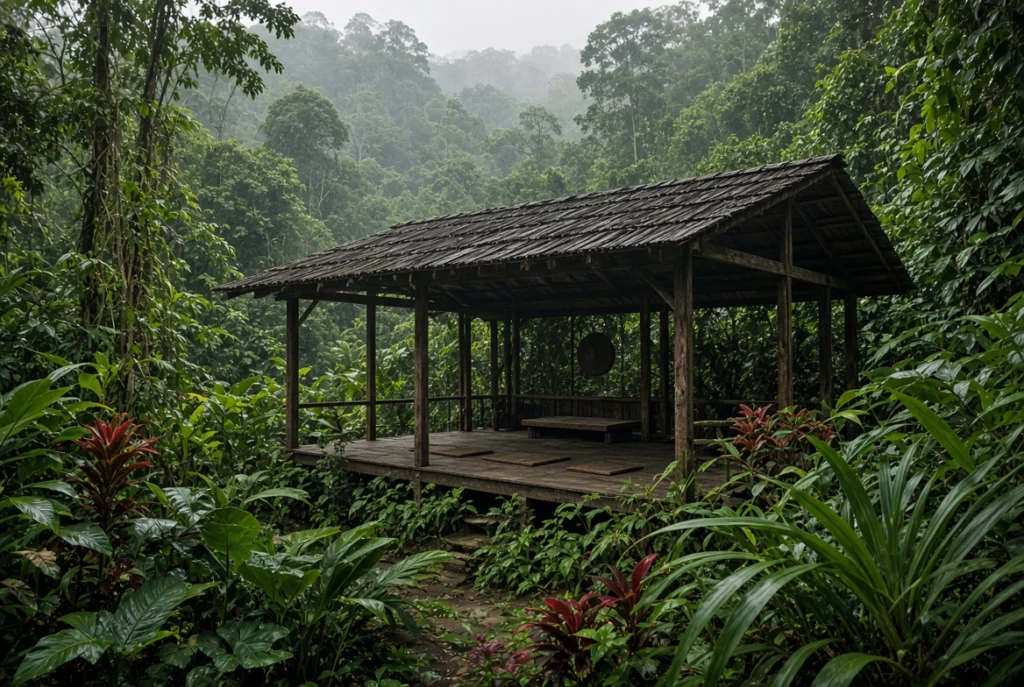
Traveling alone stops being incidental on an extended dieta and becomes the point. A dieta is quiet, restricted and long, and company works against it.
We run Amazonian dietas using plants brought up from the Ucayali, and Andean dietas using plants grown on our own terraces. Chiric sanango and bobinsana run 8 days. Ajo sacha runs 8 to 15.
If you’re weighing a dieta, come alone. I don’t hedge on that one.
What Solo Travelers Ask Us Most Often
The same 4 things, in roughly the same order, in almost every screening call.
Will I know anyone. No, and that’s normal, because most of the room is in the same position. Will I get lost. No, you’re collected at the airport. Will I be homesick. Possibly around Day 4, and it usually passes after the second ceremony. Will I be frightened during ceremony. Probably at some point, and someone will be sitting next to you when it happens.
The anticipation is reliably worse than the thing. That’s the most consistent pattern in 9 years of doing this.
Solo Travelers At Ayahuasca Retreat Center In Pisac
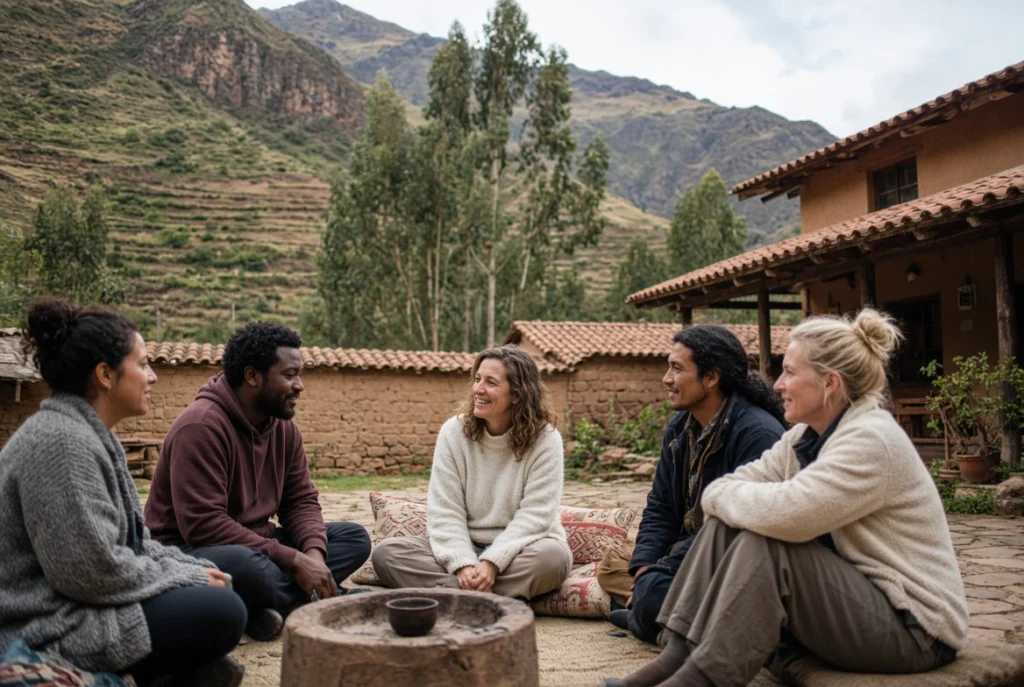
This center is built for solo travelers, and one policy proves it: we won’t take a pre-formed group larger than 3.
That costs us money. Groups book faster and pay more. Tomas has been immovable on it since the beginning. His reasoning is that 6 friends import their whole social structure into the maloca and never leave it. A mix of strangers does something a group can’t.
So the room you walk into holds 12 people, most of whom also came by themselves, held by the same 3 healers every night for 11 days. You can read about the team and how the center came to exist, look at how the 11-day retreat is structured, or start at the Sacred Valley retreat center itself if you’re new here. Peak months from June to September tend to fill 5 to 7 months out, so the calendar is usually the real constraint.
Running something that has to be trustworthy in public takes the same discipline anywhere, which is something I learned building a business that answers to clients long before I ran this one.
What I’d Tell You If You Called Me Tonight
Book the flight. Traveling alone to an ayahuasca retreat in Peru is the normal way to do this, and the fear you’re feeling about arriving by yourself is aimed at the wrong target.
Aim it at the screening instead. Ask who reads your medical form, how many staff are in the room, and how far the hospital is. If a center answers those in numbers, you’re probably fine going alone. If it answers in adjectives, don’t go at all, with or without a friend.
Traveling alone to an ayahuasca retreat in Peru starts with one conversation, so when you’re ready you can start an application and book a screening call.
Frequently Asked Questions
Can you travel alone to an ayahuasca retreat in Peru?
Yes. About 60% of guests at our Sacred Valley center arrive by themselves, and solo arrival is the most common way people attend plant medicine retreats in Peru. The US State Department currently rates Peru at Level 2, the same level as France, Italy and Spain, and its advisory states that Cusco and the Sacred Valley sit outside the 2 restricted zones.
Is it safe for a woman to travel alone to an ayahuasca retreat in Peru?
That depends on the center’s staffing and policy, not on the country. At our center, 2 women are present in the ceremony room every night as a rule, staff contact with guests is banned including for 90 days after departure, and there are 3 separate reporting channels. Across 9 years and roughly 2,100 guests, we’ve had zero misconduct incidents. Ask any center for that policy in writing before you book.
What is the biggest risk for someone arriving alone in the Sacred Valley?
Altitude, not crime. The CDC reports that 25% of people sleeping above 2,450 metres develop acute mountain sickness, and traveling alone means nobody notices your symptoms early. We require arrival 36 hours ahead, keep the first 2 days ceremony-free, and take a pulse oximetry baseline on Day 1.
Do I need to speak Spanish to attend an ayahuasca retreat in Peru?
No. Screening calls, preparation materials, integration circles and follow-up calls are all conducted in English, and 2 of our facilitators work in both English and Spanish. The icaros are sung in Shipibo and Quechua and aren’t translated, because they aren’t meant to be understood intellectually.
Will I feel isolated if I show up without knowing anyone?
Rarely, because most of the room is in the same position. Groups cap at 12 guests, and we decline pre-formed groups larger than 3 so the room doesn’t split into cliques. Homesickness tends to surface around Day 4 and usually settles after the second ceremony.
What happens if something goes wrong and nobody there knows me?
That’s what the staffing ratio is for. Five staff are in the room for a maximum of 12 guests, a physician is on site for every ceremony rather than on call, and the nearest hospital is about 45 minutes away by road with a vehicle kept at the property entrance. We’ve needed a hospital once in 9 years, and that guest recovered fully.
How do I judge a retreat center if I have nobody to ask?
Use questions that have numbers in the answers. Who reviews your medical form and what are their credentials, how many staff are in the ceremony room, how far is the hospital in minutes, and who calls you after you fly home. A center that answers in adjectives instead of figures has told you what you need to know.
Pisac Ayahuasca Retreats makes no medical claims. Ayahuasca is not a treatment for any condition and may not be brought into the United States. Every place is confirmed only after physician review.