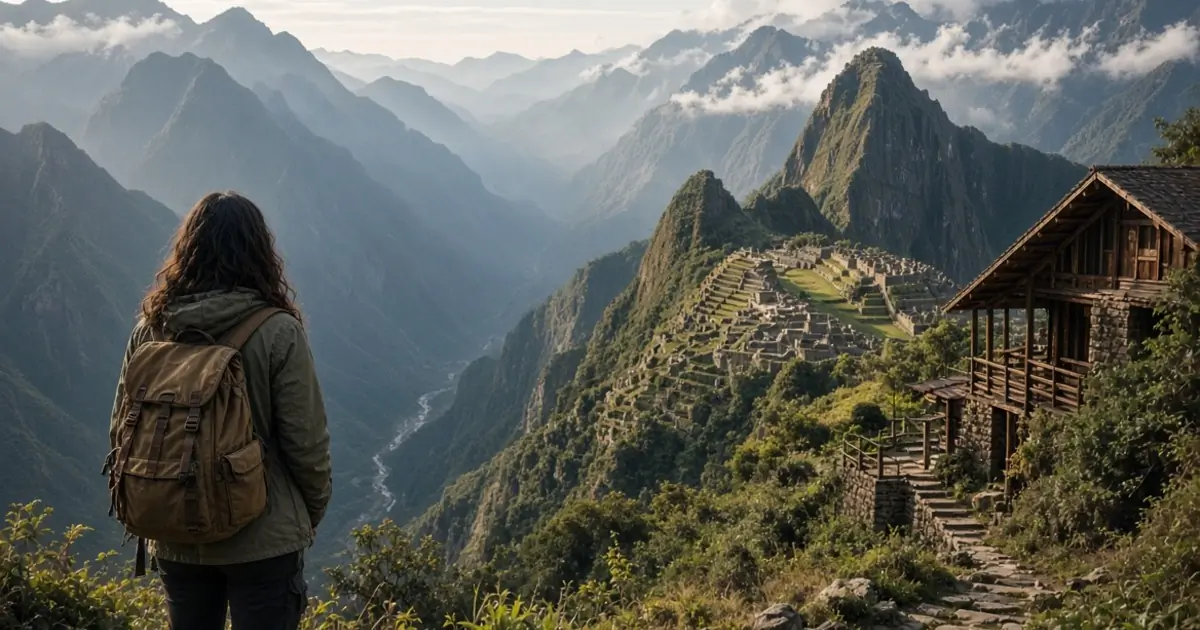
Yes. Not in a week.
The packages selling you both in 4 or 7 days are compressing 2 things that each need their own space. You can have both. Budget 17 days, and 19 if you want either one to land properly.
This page gives you the arithmetic, the altitude ledger nobody publishes in one place, and the sequencing rule that decides everything else.
One thing to fix before you read further. Almost every guide tells you to land in Cusco and rest there for 2 or 3 days. That advice puts you to sleep at 11,152 feet on the days you are least able to handle it. Everything else on your trip happens lower. So does the ceremony.
The Altitude Ledger
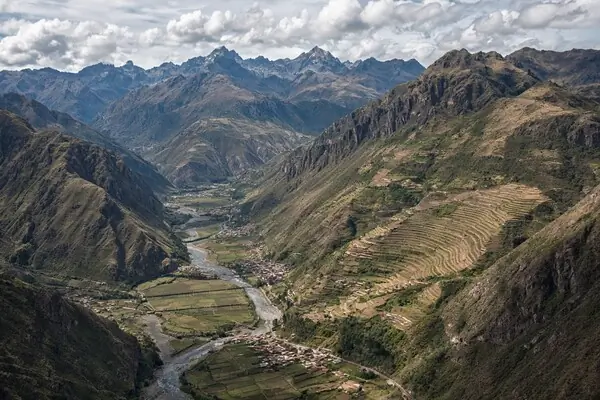
Here is every elevation on this trip in one table. Most guides give you 2 of these numbers and let you assume the rest.
| Place | Metres | Feet | What happens here |
|---|---|---|---|
| Lima | 161 | 528 | Your connection |
| Aguas Calientes | 2,040 | 6,692 | Town below Machu Picchu. Lowest night of your trip. |
| Machu Picchu citadel | 2,430 | 7,972 | The site itself |
| Ollantaytambo | 2,792 | 9,160 | Train station, Inca site |
| Urubamba | 2,870 | 9,420 | Valley floor |
| Pisac town | 2,972 | 9,751 | Market, ruins, hotels |
| Our center, above Pisac | 3,100 | 10,170 | Ceremony |
| Cusco | 3,400 | 11,152 | Airport. Highest point on your itinerary. |
Read that last column again. Cusco is the highest place you go. It is also the only place on the list you do not need to sleep.
Machu Picchu is not an altitude problem. It sits 970 metres below Cusco. Guides that list altitude among the demands of a Machu Picchu day have it backwards. Going there is a descent.
Why Cusco Is the Wrong Place to Acclimatize
The CDC Yellow Book is specific about this, and the numbers do not match the standard advice.
Risk of altitude illness starts at a sleeping altitude of 2,450 metres or above. Past 3,000 metres, the guidance is to raise your sleeping altitude by no more than 500 metres a night. And 2 to 3 nights between roughly 2,450 and 2,750 metres before going higher gives what the CDC calls marked protection.
Compare that to the map. Cusco is 3,400 metres. Pisac is 2,972. Urubamba 2,870. Ollantaytambo 2,792.
If your trip tops out at a 2,430-metre citadel and a ceremony at 3,100, no night on your itinerary requires 3,400 metres. Sleeping in Cusco puts you 300 metres above your own ceiling on day 1, straight off a plane from sea level.
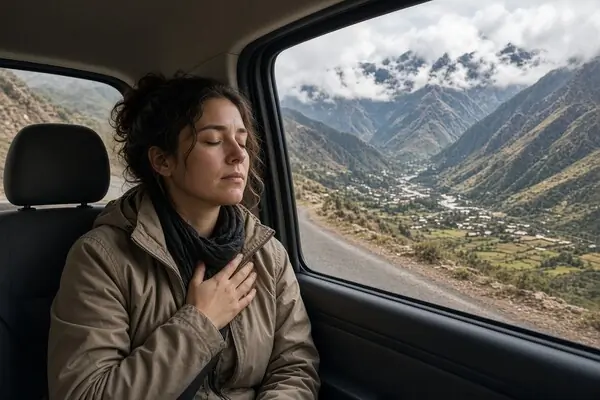
Onset is faster than most guides say too. The CDC puts first symptoms at 2 to 12 hours after arrival, not 12 to 24. Acute mountain sickness usually clears within 12 to 48 hours if you stop climbing, and runs its course over 1 to 3 days.
That timing matters for one reason. Land in Cusco in the morning, check into a hotel there, and you can be symptomatic by dinner.
The fix is a 40-minute drive. Land at Cusco airport, get in a vehicle, sleep in the Sacred Valley the same night. You have descended 430 metres before your first night’s sleep. We wrote up the difference between Pisac and Cusco altitude on its own page.
Where we are speaking from. In our first year, 3 guests developed altitude sickness during retreats. One was driven to hospital on day 2 without ever sitting in ceremony. Our lead healer’s answer was to build acclimatization into the retreat rather than hope for it. Guests now arrive in the Sacred Valley at least 36 hours before the retreat opens, and the first 2 days of the retreat itself carry no ceremony at all. Altitude incidents have been near zero since 2018.
Machu Picchu Is the Best Acclimatization Day You Will Get
This is the part nobody says.
Aguas Calientes sits at 2,040 metres. That is the lowest night available anywhere on this trip, 930 metres below Pisac.
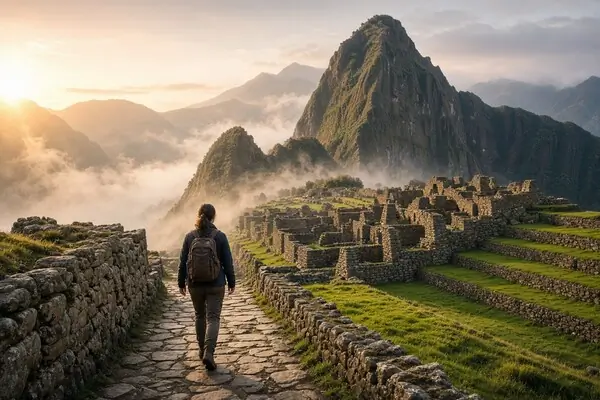
The CDC’s own logic is climb high, sleep low. A night in Aguas Calientes before you come back up to the valley is textbook. You get a real physiological reset in the middle of your pre-ceremony week, and you get the site at 6am before the day-trippers arrive.
So Machu Picchu is not something you squeeze in around the retreat. Placed correctly, it is doing work for you.
That only holds in one direction.
Machu Picchu Before the Retreat. Every Time.
Put Machu Picchu first. There is no version of this trip where the reverse works better.
The preparation reason. Dietary preparation starts 2 weeks before you arrive, not 3 days. By the time you land you are already off alcohol, cannabis, red meat, aged cheese, fermented food and caffeine. The last days before ceremony are for sleeping well and settling. A 4:30am train, a bus up a switchback, 4 hours on your feet at a site capped at 4,500 people a day, then a train back, is the opposite of settling. Our preparation guide covers the full 2 weeks.
The recovery reason. The first 2 or 3 days after a ceremony are the work. Not the aftermath of the work. Walking the terraces, writing, eating, sleeping, sitting with what came up. Booking a 5am departure into that window wastes both things at once.
The one-way-door reason. Machu Picchu tickets are dated, timed and non-transferable. Ceremony nights are not. If something has to move, it is easier to move the medicine than the ticket. Which is the argument for putting the immovable thing first, where a delay costs you a rest day instead of a ceremony.
If your ticket is already booked for after. It is workable. Leave a minimum of 3 full days between the last ceremony night and your Machu Picchu date. Ceremony night plus the following day is recovery. Day 2 is integration. Day 3 you can carry a pack up a hill.
The Arithmetic
Here is what the trip costs you in days. No padding.
| Phase | Days | Can it be cut? |
|---|---|---|
| Fly in, transfer to the valley, first night low | 1 | No |
| Acclimatization in Pisac before anything else | 2 | No |
| Machu Picchu with a night in Aguas Calientes | 2 | Down to 1 as a day trip |
| Buffer back in the valley before the retreat opens | 1 | No |
| The retreat | 11 | No |
| Post-retreat day, still in the valley | 1 | Yes, at a cost |
| Transfer to Cusco and fly | 1 | No |
| Total | 19 |
The retreat runs 11 days with 4 ceremonies, on nights 3, 5, 8 and 10. That is fixed. It is not a 5-day program with 6 optional days attached.
Three real numbers come out of that table.
- 17 days. Tight. Machu Picchu as a day trip, no post-retreat buffer, no slack for a rail closure.
- 19 days. The version we recommend.
- 28 days. The 3-week dieta with Machu Picchu on the front.
7 days is not a shorter version of this trip. It is a different trip. In a week you can do Machu Picchu properly, or a short ceremonial container properly. Not both. If a center sells you both inside 7 days, ask them where the acclimatization went and where the integration went.
We would rather tell you that now than take the deposit.
The Reverse Planner
Most people reach this page with one date already fixed. Work backwards from it.
| Your fixed thing | What it locks | Where the ceremony goes |
|---|---|---|
| Machu Picchu ticket, dated | The middle of your pre-retreat week | Retreat opens 1 to 2 days after you return to the valley |
| Inca Trail permit, dated | 4 trekking days plus 3 full recovery days | First ceremony no sooner than day 4 after you finish |
| Return flight, dated | Everything | Count back 12 days for the retreat, then 5 more for the front end |
| Retreat start date, fixed | Your front end | Machu Picchu lands 2 to 4 days before it. Arrive 36 hours earlier at minimum. |
| Nothing fixed yet | Book the retreat first | Peak-season retreats fill 5 to 7 months out and run twice a month |
One rule cuts across all 5 rows. Whatever cannot move goes on the calendar first, and it is almost never the ceremony.
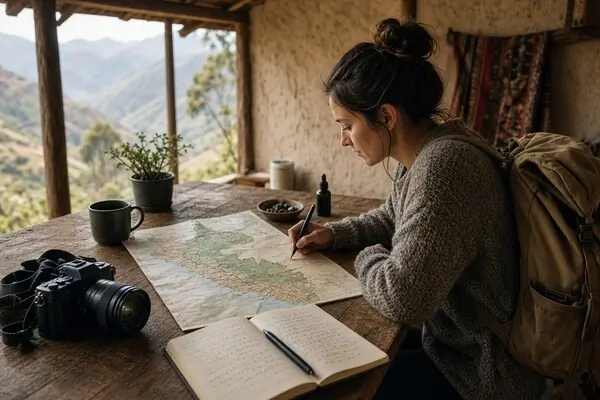
The 19-Day Sequence, Day by Day
Day 1. Land at Cusco (CUZ). Do not check into a Cusco hotel. Transfer 40 minutes to Pisac. Sleep at 2,972 metres instead of 3,400. Coca tea, an early night, nothing else.
Days 2 and 3. Rest. Walk the town. Eat. The market is minutes away and the terraces are above you if you want a slow hour of altitude. No exertion, no trekking, no late nights. These are the 2 nights the CDC guidance is asking for.
Day 4. Train day. Down the valley to Ollantaytambo, train to Aguas Calientes, 90 minutes. Sleep at 2,040 metres, the lowest night of your trip.
Day 5. Machu Picchu on an early entry slot. Circuit 2 if this is your first visit. Back down, afternoon train, sleep in the valley.
Day 6. Buffer. Nothing scheduled. This is where a rail delay or a weather day gets absorbed without touching your retreat.
Days 7 to 17. The retreat. The first 2 days carry no ceremony by design, for altitude adjustment, a medical baseline and your coca leaf reading with the lead healer. Ceremonies on nights 3, 5, 8 and 10, with an integration circle every morning after.
Day 18. Still in the valley. A slow day, nothing booked. This is the day people cut first and regret most.
Day 19. Transfer to Cusco. Afternoon or evening flight out.
What this buys you. Machu Picchu at a good hour with a body that has adjusted. A ceremony you arrive at rested instead of depleted. And a day between the last ceremony and an airport, which is the difference between integration starting and integration getting postponed by 3 weeks.
Where it is still tight. One buffer day. If the rail line closes for 48 hours you lose Machu Picchu, not the retreat. That is the correct thing to lose, and it is why the buffer sits on the Machu Picchu side.
Machu Picchu in 2026: What Actually Changed
The entry rules moved and a lot of published itineraries have not caught up.
Circuits. There are 3, and the naming misleads people constantly.
| Circuit | Official name | What you get | Who it is for |
|---|---|---|---|
| 1 | Panoramic | Upper terraces. Routes 1A Machu Picchu Mountain, 1B Upper Terrace, 1C Sun Gate, 1D Inca Bridge. Excludes the interior. | Hikers, repeat visitors |
| 2 | Classic | The postcard view plus the Sacred Plaza, Temple of the Three Windows, Main Temple. Routes 2A and 2B. 2.5 to 3 hours. | First visit. Book this one. |
| 3 | Royalty | Lower sections only. Required for Huayna Picchu (3A) and Huchuy Picchu. No upper terraces. | People who came for the climb |
Circuit 1 is not the classic route, whatever a booking site tells you. Circuit 2 is.
The rules that catch people out.
- Entry is by hourly slot, 06:00 to 15:00, with a 30-minute grace window. Miss it and you can be refused.
- No re-entry once you are inside.
- Movement is one-way along your assigned circuit. You cannot double back.
- Roughly 4 hours maximum on a standard circuit.
- Daily cap 4,500, rising to 5,600 on designated high-season dates.
- Banned: bags over 40 x 35 x 20 cm, food, tripods, selfie sticks, drones. Leaning on the walls is prohibited.
Booking window. High season runs 15 June to 15 October, plus 1 January, Holy Week and 25 December. The Ministry has sold 150,000 tickets in a single week. Book high-season dates as early as you can get them, and treat 2 to 4 weeks out as too late rather than as a shoulder-season minimum. Buy from the official ticket site and not a reseller.
Trains, Permits, and What Happens When the Line Closes
Trains. Ollantaytambo to Aguas Calientes, 90 minutes, several departures daily. PeruRail and Inca Rail both run it. Ollantaytambo is the reliable departure point. Cusco-city departures from San Pedro and Poroy have been suspended and reinstated more than once, so confirm the station printed on your ticket rather than assuming.
The line does close. On 4 August 2026 both operators suspended the Ollantaytambo route for a fire and rockslide near KM 107. Service resumed the next day. A separate Inca Trail closure followed on 19 August. This happens most years, usually briefly, and it is the single strongest argument for the buffer day.
Inca Trail. 500 permits a day, inclusive of guides and porters, and the trail closes every February for maintenance. Peak dates go months ahead. If the trail is in your plan it goes at the very front of the trip, with a minimum of 3 full rest days between the last trekking day and the first ceremony night. The trail crosses 4,215 metres at Dead Woman’s Pass. Arriving at ceremony from that is arriving depleted.
Order of booking. Inca Trail permit first if you want one. Machu Picchu ticket second. Retreat dates third. Flights last, once the middle is fixed. We run 2 retreats a month and peak-season dates fill 5 to 7 months out, so the retreat is less flexible than most people expect.
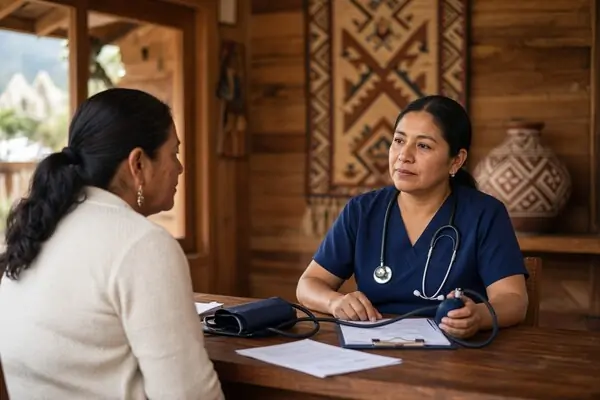
Medication, Screening, and the Acetazolamide Question
Read this part properly. This is the section where getting it wrong has a medical consequence rather than a scheduling one.
Acetazolamide (Diamox). A lot of visitors take it for altitude. You will find pages telling you it is not on the ayahuasca contraindication list, which is true in the narrow sense that it is not a serotonergic drug, and misleading in the way it gets used.
Our position is a 48-hour washout before any ceremony, no exceptions. That is stricter than skip it on ceremony day, and it comes from an actual incident. In 2018 a guest arrived taking acetazolamide and did not declare it, because she had filed it mentally as a travel medication rather than a drug. She had a prolonged episode of dizziness, confusion and blood pressure swings that our physician managed over several hours. The interaction is not well documented in the literature. That is a reason for caution, not a reason for confidence.
If you need altitude support, say so at application and our medical director will work through the alternatives with you.
What else has to be declared. SSRIs and SNRIs need a minimum 6-week taper supervised by both our physician and your own prescriber. Fluoxetine needs 8 weeks because of its half-life. Lithium is an absolute no. So are pharmaceutical MAOIs. ADHD medication, tramadol, St John’s Wort and 5-HTP each carry their own timeline. We covered SSRIs and ayahuasca in full on its own page.
Altitude adds screening criteria that lowland centers do not have. Uncontrolled hypertension, significant respiratory conditions such as severe asthma or COPD, uncontrolled cardiac conditions, and a history of severe altitude sickness are all disqualifying here in a way they might not be at sea level. We decline 13% of applicants outright. Guests over 50, or with any cardiac history, submit an ECG and bloodwork before acceptance. Every applicant does a 30 to 45 minute video call before a place is offered.
On arrival. Pulse oximetry and a blood pressure baseline on day 1. Below 88% saturation and you rest lower, in Pisac town, before joining the group. Across more than 700 ceremonies at 3,100 metres we have given supplemental oxygen roughly 15 to 18 times, usually briefly, during hard purging. Our medical director is on site for every ceremony block, not on call from town.
One observation, offered as observation. After more than 700 ceremonies at this elevation, onset here runs faster than what our healers report from their lowland work. Roughly 15 to 20 minutes rather than 30 to 45. That is our own pattern across 9 years and about 2,100 guests, not a published finding, and we are not going to dress it up as one.
What the altitude removes. Malaria is not a consideration at 3,100 metres, so you will not be taking antimalarials, which are contraindicated with the medicine. Yellow fever vaccination is not required for the Sacred Valley either. Both of those are real planning problems at Amazon centers and neither one applies here.
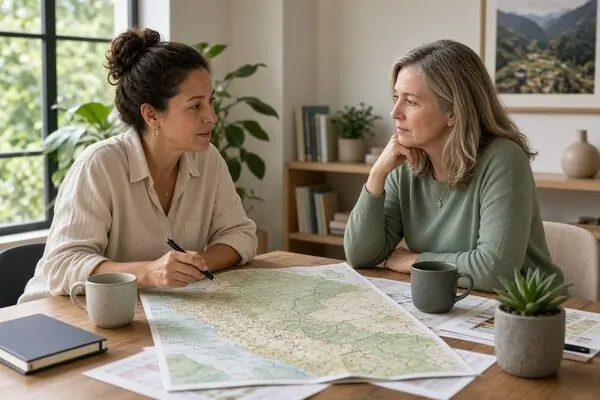
Who Should Not Combine These
Some people should pick one.
You have under 17 days. Do Machu Picchu. Come back for the medicine when you have the time. Compressing the retreat is the worse trade.
You have a respiratory or cardiac condition. Machu Picchu at 2,430 metres and a ceremony at 3,100 are different asks. The second may not be available to you, and a physician rather than a search engine should be the one to say so.
You want the Inca Trail and 4 ceremonies inside a fortnight. Pick one. 4,215 metres and 4 nights of medicine in 14 days is a body management problem, not an itinerary problem.
You are booking the ceremony as the interesting item on a Peru holiday. That is the wrong frame, and it usually shows up on the second night.
Between outright declines and conditional acceptances that never clear, roughly 1 in 5 people who apply here never attend. That number is not a selling point. It is what the screening is for. You can read about the team who runs it and how the medicine is prepared on site.
What It Costs
The 11-day retreat is $3,000 in an individual room, and $2,400 per person sharing. That covers airport pickup and drop-off, all ground transfer, all meals, 4 ceremonies, your coca leaf reading, plant baths, every integration circle, individual healer consultations, and a year of follow-up after you go home. Payment plans are available and the deposit is 50%.
Not included, and worth budgeting now: international flights, the domestic hop to Cusco, travel insurance with medical evacuation cover, which we require rather than recommend, and your pre-retreat nights in the valley. Those extra nights are the acclimatization this whole page is arguing for, so treat them as part of the retreat rather than as an add-on.
The extended 3-week dieta is $5,800. Full detail on both is on the ayahuasca retreat page.
Frequently Asked Questions
Can I do ayahuasca and Machu Picchu in the same trip?
Yes, with 17 days minimum and 19 for a version that works properly. Machu Picchu goes before the retreat. The pre-retreat window is the only place it fits without damaging either experience.
How many days do I need?
17 tight, 19 recommended, 28 if you want the 3-week dieta. The arithmetic is 1 arrival day, 2 acclimatization days, 2 for Machu Picchu with an overnight, 1 buffer, 11 for the retreat, and 2 to come down and fly.
Is 7 days enough?
No. In a week you can do Machu Picchu well or a ceremonial container well. Not both. Packages selling both inside 7 days have removed either the acclimatization or the integration, and usually both.
Should Machu Picchu come before or after the ceremony?
Before. Preparation wants a quiet week and the site does not deliver one. Integration wants the 2 to 3 days straight after ceremony, and a 5am train takes them. If your ticket is already booked for after, leave 3 full days between the last ceremony and the visit.
Can I visit Machu Picchu the day after a ceremony?
No. Early travel, several hours on your feet and a crowded site the morning after an all-night ceremony ruins both. Minimum 3 days.
Where should I sleep when I first land?
The Sacred Valley, not Cusco. Cusco is 3,400 metres and it is the highest point on this itinerary. Pisac is 2,972. The CDC recommends 2 to 3 nights between 2,450 and 2,750 metres before going higher, and the valley is the closest thing to that on your route. The transfer is 40 minutes from the airport.
Which Machu Picchu circuit should I book?
Circuit 2, the Classic. It gives you the postcard view plus the Sacred Plaza, the Temple of the Three Windows and the Main Temple, in 2.5 to 3 hours. Circuit 1 is Panoramic, not classic, despite how it is often described. Circuit 3 is the one you need for Huayna Picchu.
Can I take Diamox for altitude if I am doing a ceremony?
Not within 48 hours of ceremony. We require a full 48-hour washout, which is stricter than most guidance you will read, and it comes from an incident here in 2018. Declare it at application and our medical director will go through the alternatives with you.
Can I do the Inca Trail before a ceremony?
Yes, with at least 3 full rest days between the last trekking day and the first ceremony night. The trail crosses 4,215 metres and leaves you depleted. Book it at the very start of the trip. Permits are capped at 500 a day and the trail closes every February.
What if the train line closes while I am there?
It happens most years, usually for a day or two. In August 2026 both operators suspended the Ollantaytambo route for a fire and rockslide, and service resumed the next day. Keep one buffer day on the Machu Picchu side of your itinerary and a short closure costs you a rest day instead of your ticket.
Do you help with the planning?
Yes, during intake, at no charge. Send your dates and anything already booked and we sequence the rest around it. Start at Pisac Ayahuasca Retreats.
Pisac Ayahuasca Retreats makes no medical claims. Ayahuasca is not a treatment for any condition and may not be brought into the United States. Every place is confirmed only after physician review.