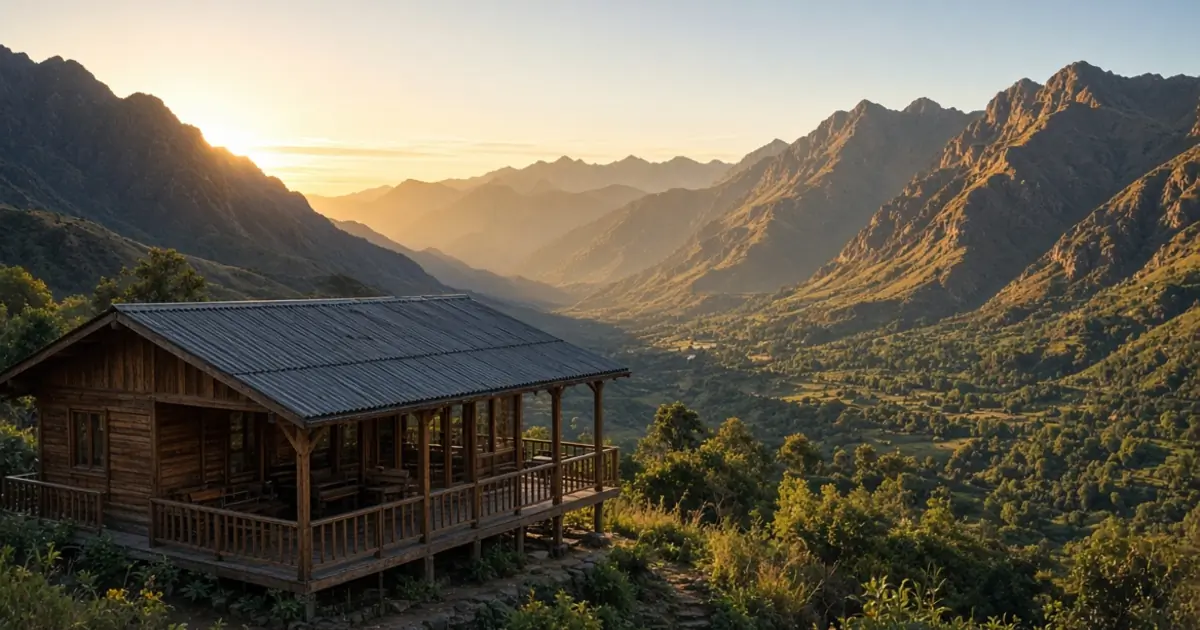
The best time of year for an ayahuasca retreat in the Sacred Valley is April, May, September or October. Those 4 months sit between the rain and the hard cold. Clear nights, without freezing ones.
That’s the answer. Now the part most guides skip.
Almost every article about ayahuasca retreat timing copies its advice from Amazon centers. Come in dry season, May to October, because it rains less. At 3,100 metres in the Andes that advice is half wrong. Dry season here is also winter. Our ceremony room drops to 3°C on a July night.
I’ve watched guests shake under 2 alpaca blankets in July and call it the best night of the retreat. I’ve also watched a man spend his entire first ceremony thinking about his feet.
Season Means Something Different At Altitude Than It Does In The Jungle
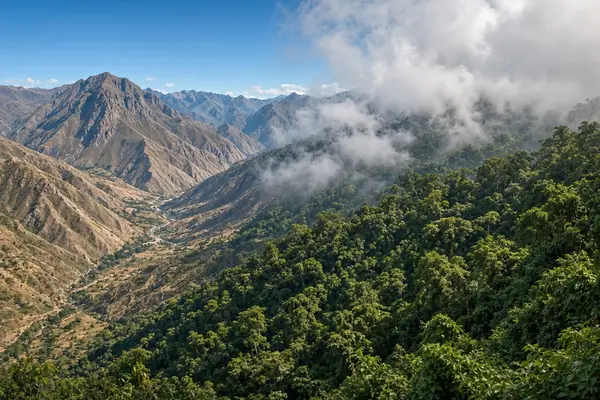
The best time of year for an ayahuasca retreat depends on elevation, not just rainfall. In the Peruvian Amazon, season barely changes the ceremony. In the Andean Sacred Valley at 3,100 metres, it changes it a lot. Dry season nights fall near 0°C. Rainy season nights hold around 7°C.
Here’s the arithmetic.
Cusco sits 26 km from our center above Pisac, at close to the same elevation. Weather Spark’s 1980 to 2016 record puts the average July low at 0°C and the average January low at 7°C. Daytime highs barely move, 17°C to 18°C every month of the year. So what swings across our calendar isn’t heat. It’s the night.
Compare Iquitos. Mean temperature there moves 1.3°C across the whole year and it rains every month. Season in the jungle is a travel question. Here it’s a ceremony question.
One caution. The 3 climate sources I checked disagree on annual rainfall by a factor of 3, so I quote temperature and rain odds only. Live conditions are on Peru’s national weather service.
This article won’t cover Amazon retreats. Different physics, different answer, and I’d be guessing.
So Which Season Is Actually Better In The Sacred Valley?
Neither wins outright. Dry season gives you clear skies and near-freezing nights. Rainy season gives warmer nights and cloud. Pick on how your body handles cold.
The dry season buys you stars and charges you cold (May to October)
Dry season runs roughly May to October. Chance of a wet day drops to 4% in May and holds at 3% through June, July and August. Driest, clearest, coldest.
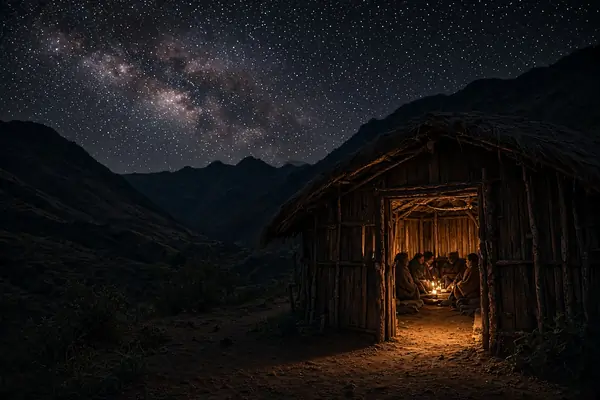
At 3,100 metres with no light pollution, the Milky Way is a visible band through the maloca doorway. After 700-plus ceremonies here, the most common thing guests say the next morning isn’t about visions. It’s the stars.
The charge is real. Inside the maloca on a July night the temperature sits between 3°C and 5°C after midnight.
Tomas, who co-founded this place and sits every ceremony, calls that a feature. The cold makes the body honest, he says. You can’t hide in comfort when the mountain is asking you to be present.
I agree with him now. I didn’t at first.
Is the rainy season worse? (November to April)
No. It’s different, and for some people better. Rainy season nights run 6°C to 12°C in the maloca instead of 2°C to 8°C. For anyone who runs cold, that gap decides the retreat.
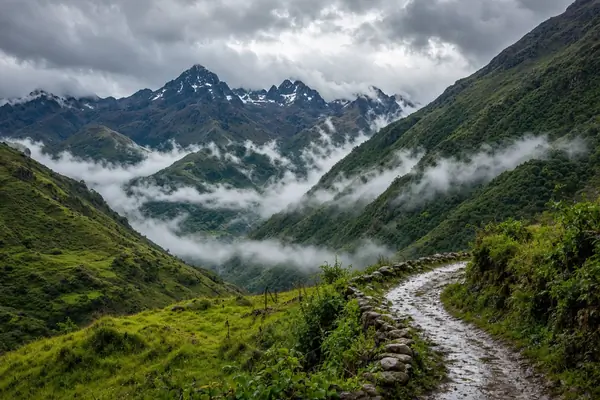
The cost is cloud. Wet day odds climb to 43% in December and peak near 51% in January. You’ll lose stargazing nights. Roads stay open. The valley turns green.
Tomas prefers ceremony during storms. He says the thunder opens the field.
Actually, that framing isn’t right. Storms aren’t better. A storm hands the room something to work with, and Tomas has 32 years of knowing what to do with it. I’ve sat 2 of those nights and both are in my top 5.
Month By Month, What You’re Choosing Between
Figures are for Cusco, 26 km away at a similar elevation, from Weather Spark. Our maloca runs colder than the town at night.
| Month | Avg night low | Wet day chance | Here |
|---|---|---|---|
| January | 7°C | 51% | Warmest nights, wettest month, storms |
| February | 7°C | 43% | Same, and the Inca Trail is shut |
| March | 7°C | 36% | Rain easing, valley at its greenest |
| April | 5°C | 14% | Rain gone, cold not arrived. My pick. |
| May | 2°C | 4% | Clear skies start, so does the cold |
| June | 1°C | 3% | Peak season, Inti Raymi on the 24th |
| July | 0°C | 3% | Coldest, best stars, books out first |
| August | 2°C | 3% | Still cold, still full |
| September | 4°C | 8% | Cold easing, crowds thinning. My other pick. |
| October | 6°C | 21% | Mild nights, rain returning |
| November | 6°C | 28% | Quiet, cheap flights, unpredictable |
| December | 7°C | 43% | Warm nights, wet, flights cost more |
Three Things That Should Pick Your Month Before The Weather Does
Weather is the 4th most important variable in booking an ayahuasca retreat. These 3 beat it.
How far ahead do you have to book?
Further than you think, for June through September. We run 20 to 22 retreats a year, 2 a month, 12 guests maximum. Roughly 250 seats for the year.
Peak months sell out 5 to 7 months ahead. December through March usually has room 2 to 3 months out. We publish dates 12 months early for that reason, and the calendar gets checked monthly by the people who keep our site current.
The honest sequence:
- Work out which weeks you can actually take off, unpaid days included.
- Check them against our published retreat dates.
- Only then think about weather.
If July is your only window, come in July. Bring better clothes.
Festivals worth planning around
2 are worth building a trip around. Inti Raymi fills Cusco on June 24. Virgen del Carmen takes Paucartambo on July 15 and 16, and it’s the less touristed of the pair.
Corpus Christi moves every year, 60 days after Easter, so check the date before you book. Carnival lands in February.
Come for a festival before or after the retreat. The 11 days here are full.
Is there a month to avoid?
February, if adding Machu Picchu to the same trip matters to you. Cusco’s Dirección Desconcentrada de Cultura closes the Inca Trail for all of February each year for maintenance across 15 archaeological sites. Machu Picchu itself stays open by train.
For the ceremony alone, no month is off the table. We’ve run retreats in all 12.
The 36 Hours That Matter More Than The Month You Pick
The date on your ticket matters less than what you do with the 2 days before it.
Altitude, not the ayahuasca, is what puts people in a car to the hospital here. And altitude doesn’t care what month it is.
The CDC puts the start of altitude illness risk at a sleeping altitude of 2,450 metres. We sit at 3,100. Roughly 25% of people sleeping above that line at Colorado ski resorts get acute mountain sickness, and fast ascent pushes it toward 50%.
In our first year, 3 guests got moderate altitude sickness and 1 went to hospital on day 2 without drinking anything. So we now require arrival 36 hours early and keep the first 2 days ceremony-free. The CDC’s own acclimatization checklist says much the same thing. Since 2018, altitude incidents here are close to zero.
Where you sleep those first nights, Pisac or Cusco, moves the math more than May or November does.
Diet, medication and the taper clock
Season doesn’t move these dates. Your prescription does.
Diet starts 2 weeks out. No pork, no red meat, no aged cheese, no alcohol, no cannabis. An SSRI taper needs 6 weeks minimum, 8 for fluoxetine, supervised by your prescriber and reviewed by ours.
Count backwards before you book the flight. We turn away 13% of applicants, and an unfinished taper is one reason. Full detail is in the preparation guide.
Picking Your Month, And Picking Your Retreat
Take one thing from this page. The best time of year for an ayahuasca retreat is the window when you can drop everything for 11 days and arrive 36 hours early. The rest is a tiebreaker.
April and September are my picks. July has the best sky in South America and the coldest room you’ll ever sit in.
And leave room on the other side. The month after you get home does more of the work than the month you flew in.
Bring the right clothes and the cold stops mattering. Bring flip flops and no month saves you.
Frequently Asked Questions
What is the best time of year for an ayahuasca retreat in Peru?
For the Andean Sacred Valley, April, May, September and October balance dry nights against tolerable cold. For the Amazon lowlands the answer matters far less, because Iquitos has no real dry season and its mean temperature moves only 1.3°C across the year.
Is dry season or rainy season better for an ayahuasca ceremony at altitude?
Dry season gives clearer skies and drops the ceremony room to 3°C to 5°C after midnight. Rainy season holds nights at 6°C to 12°C but costs rain on 43% to 51% of days in December and January. Cold tolerance decides it.
How far in advance should I book an ayahuasca retreat?
Book 5 to 7 months ahead for June through September, and 2 to 3 months for December through March. Peak months fill first because every retreat takes 12 guests.
Does the season change the ayahuasca experience itself?
At altitude, yes. Onset here runs 15 to 20 minutes rather than the 30 to 45 common at sea level. Across 700 ceremonies, colder nights have produced more grounded, less dissociative experiences. Guests say the cold makes it harder to drift, which some of them want and some of them don’t.
What is the best time of year for an ayahuasca retreat if I also want to see Machu Picchu?
Any month except February. Cusco’s cultural authority closes the Inca Trail from February 1 to 28 each year for maintenance. Machu Picchu stays reachable by train, with a daily visitor cap of 4,044.
Do I need malaria pills or a yellow fever shot in the Sacred Valley?
No. Malaria-carrying mosquitoes don’t live at 3,100 metres, and yellow fever vaccination isn’t required for highland Cusco. That removes the antimalarial interaction question Amazon centers have to manage.
Pisac Ayahuasca Retreats makes no medical claims. Ayahuasca is not a treatment for any condition and may not be brought into the United States. Every place is confirmed only after physician review.