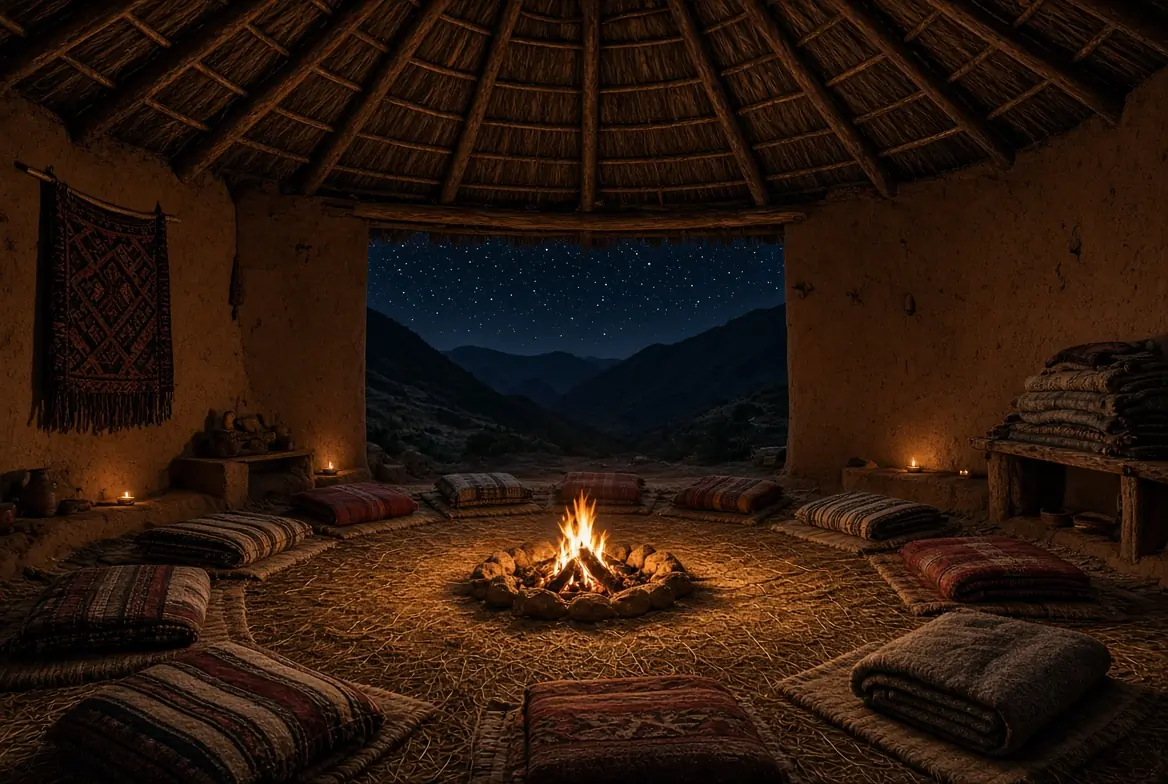
Most of what to expect at an ayahuasca retreat is a schedule, not a mystery. You arrive 2 days early. You eat plain food and drink coca tea while your body adjusts to the altitude. On night 3 you walk into a round adobe room at 7:15 PM, sit on a mat with a bucket and a wool blanket, and drink roughly 45ml of a bitter brown liquid at 8:00 PM. You probably vomit. Three healers sing over you until 3:00 AM. Then you do it again on nights 5, 8 and 10.
That’s the container. What happens inside it is the part nobody can put on a timetable.
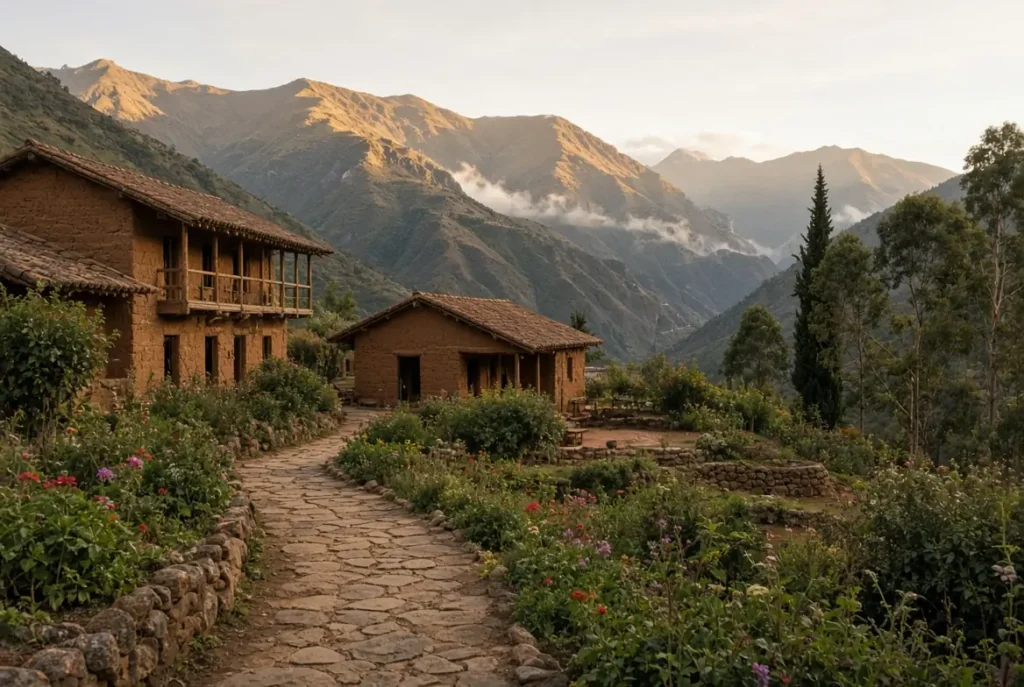
I’ve run the center above Pisac since 2017. Roughly 2,100 guests and more than 700 ceremonies, all at 3,100 metres in the Sacred Valley. This is the version of the answer I give people on the phone.
I won’t describe visions here. One person’s jaguar becomes the next person’s expectation, and expectation is the worst thing to carry into a maloca.
What to Expect at an Ayahuasca Retreat, in 60 Words
An ayahuasca retreat is a multi-day stay where trained healers serve a brew made from the Banisteriopsis caapi vine and Psychotria viridis leaf during structured night ceremonies. Most retreats run 7 to 12 days and include 3 to 6 ceremonies, a restricted diet before and during, and group integration sessions the following mornings. Ceremonies typically last 5 to 7 hours.
Everything else varies. Group size, healer ratio, whether anyone medical is on site, what happens at 2 AM when someone panics. Those are the whole difference between centers, and almost none appear on a booking page.
A Ceremony Night, Hour by Hour
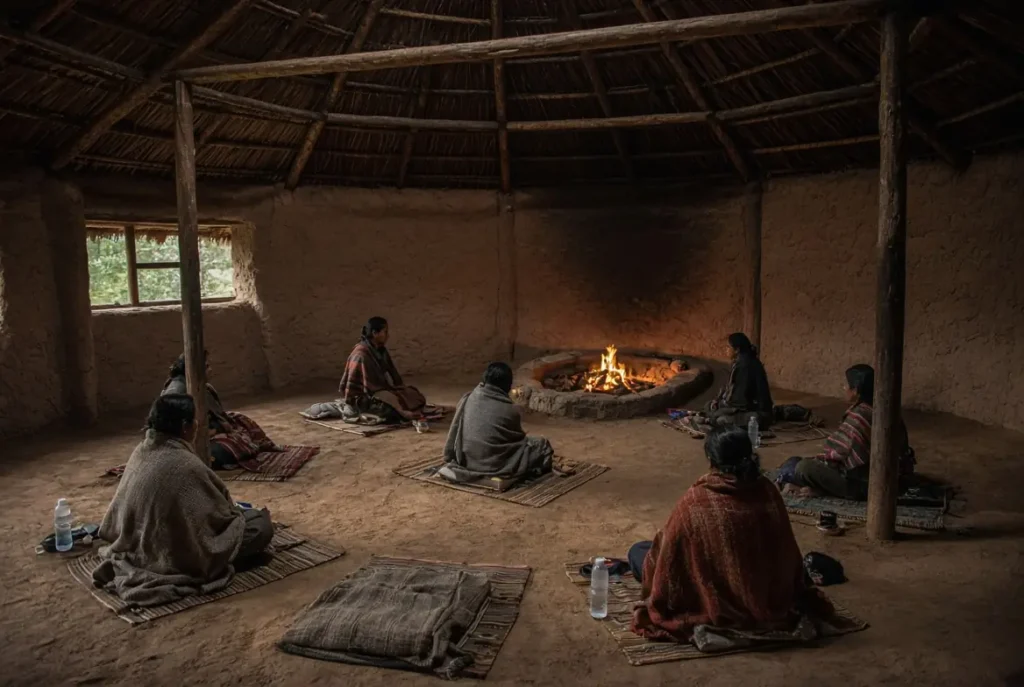
A ceremony night at our center runs 7 hours and 15 minutes from arrival to close. This is the sequence, with real clock times.
- 4:00 PM. Last meal. Plain rice, boiled potatoes, steamed vegetables. No salt, no oil, no seasoning.
- 5:00 to 7:00 PM. Quiet time in your room. No group talk. A facilitator finds anyone who looks like they’re spiralling.
- 7:00 PM. You gather at the maloca door with your blanket, water and bucket. Fleece, wool socks, a hat. No phone, no watch.
- 7:15 PM. You take your mat. Tomas assigns positions from your coca leaf reading, so you don’t choose where you sit.
- 7:30 PM. Rules. Stay on your mat. Purge into your bucket. No talking, no touching anyone else. Raise a hand and someone comes.
- 7:45 PM. Tomas opens. Mapacho tobacco, coca leaves into the fire as an offering to the mountains, protection songs.
- 8:00 PM. Serving. You go up one at a time. He holds your hands, sings a short song, then pours. Twelve people takes 15 minutes.
- 8:15 PM. The fire drops to embers. Not full darkness. You see shapes, not faces, and the stars through the east-facing doorway.
- 8:15 to 8:45 PM. Nothing. This is the part people hate. You lie there wondering if you got a weak cup.
- 8:45 PM. Tomas starts singing. Isabel and Ernesto layer in. Purging usually starts around now.
- 10:00 PM. Second cup offered. Tomas decides. He turns down roughly 1 in 4 requests, which annoys people at the time and almost never the next morning.
- 12:00 to 2:00 AM. The coldest and deepest stretch. The maloca can sit at 3 to 5 degrees Celsius on a winter night.
- 2:00 AM. The songs soften. He builds the fire back up.
- 3:00 AM. Closing despacho. Coca leaves, flowers and seeds into the fire. Ceremony closed.
- 3:00 to 3:30 AM. Hot tea, water, a light snack. You walk back to your room on lit stone paths when you’re ready.
Four ceremonies, on nights 3, 5, 8 and 10 of an 11-day retreat.
Why Doesn’t the First Ceremony Happen on Night 1?
Because your body needs 2 days at altitude before you ask it to do anything else. That answer cost us 3 rough years to learn.
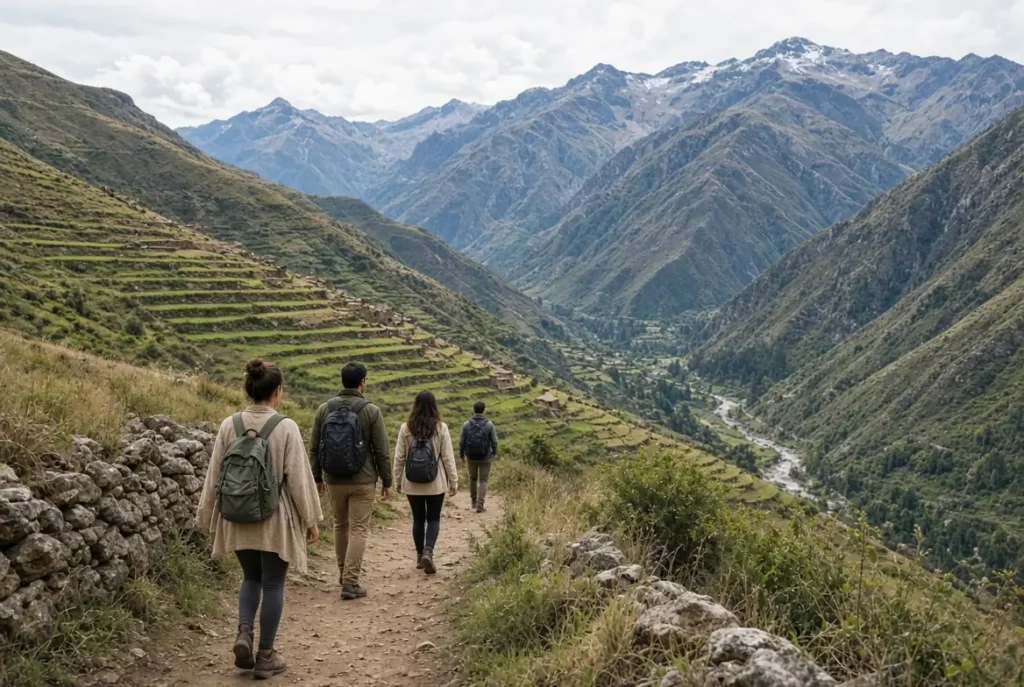
Acute mountain sickness affects 25% to 43% of people ascending to elevations between 2,500 and 4,300 metres, according to the National Library of Medicine’s reference summary on the condition. Pisac sits at roughly 3,100 metres. Cusco airport, where nearly everyone lands, is higher still at about 3,400.
In our first year, 3 guests developed moderate altitude sickness. One went to hospital on day 2, before drinking anything. The medicine wasn’t the problem. Landing at 3,400 metres on a Tuesday and drinking that night was.
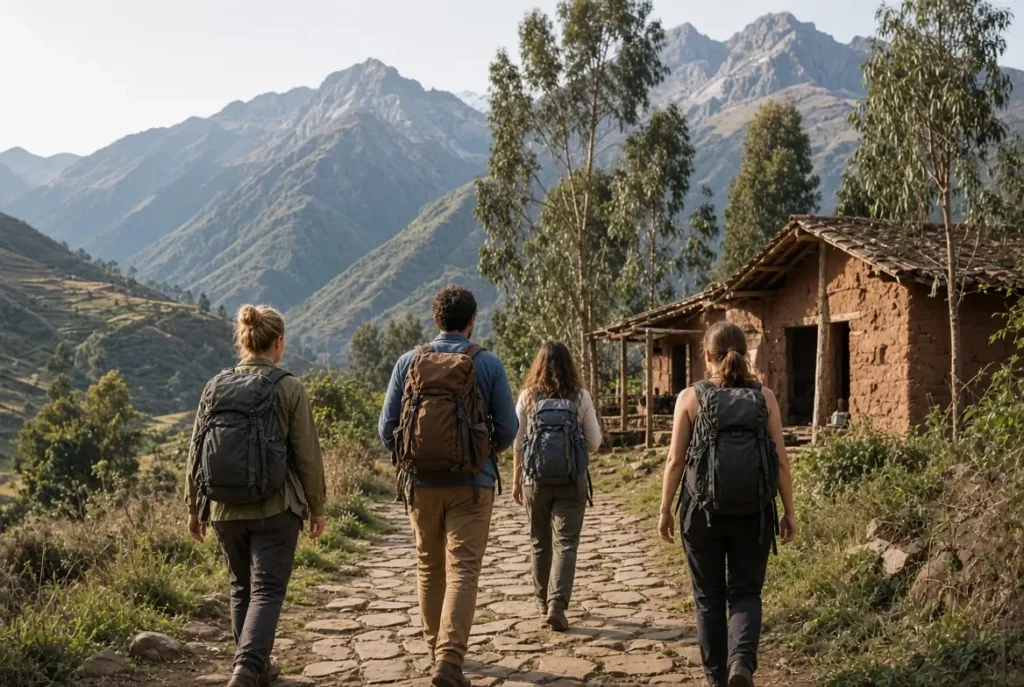
So the retreat opens with 2 ceremony-free days. Coca tea, slow walks, a baseline medical check, the coca leaf reading with Tomas. We also ask guests to be in the Sacred Valley at least 36 hours before day 1, which makes where you sleep first matter more than most people expect.
The side effect surprised me. Guests who settle in for 2 days reach their first ceremony calmer. Better outcomes, not just fewer headaches.
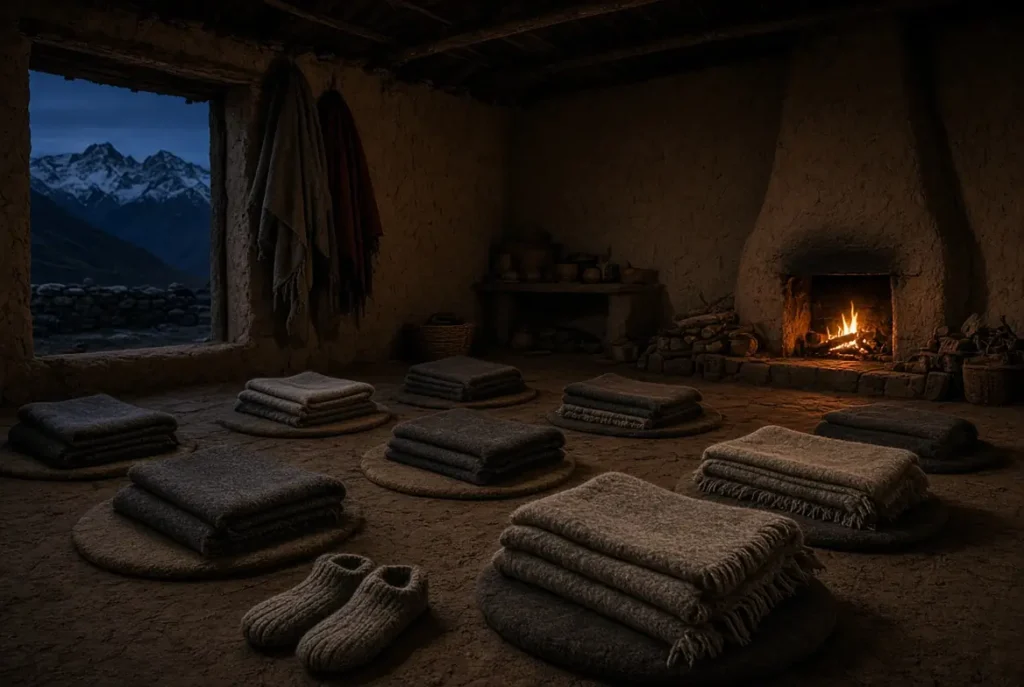
The Cold Is the Part Nobody Warns You About
Inside the maloca during ceremony, the temperature runs between 3 and 10 degrees Celsius depending on the season. Alpaca blankets, a hearth fire and thermal layers take the edge off. They don’t remove it.
“I wish someone had told me about the cold” is the most common thing guests say on the last morning. It beats every comment about visions.
I used to frame the cold as something to get through. That was wrong. The cold does a job. You can’t drift or float away when your body is telling you it’s 4 degrees. It keeps you in the room. Tomas says the cold makes the medicine sharper, and after 700 ceremonies I’ve stopped arguing.
So pack thermal layers, fleece, wool socks, a warm hat, and a headlamp with a red setting. Guests who pack for “Peru” imagining jungle heat spend the first ceremony thinking about their feet.
What Do You Have to Stop Taking Before You Drink?
Every serotonergic drug, and the taper starts weeks before you fly. Ayahuasca contains harmala alkaloids that inhibit monoamine oxidase. That’s the entire safety picture. Combining them with a serotonergic antidepressant can produce serotonin syndrome, a reaction Callaway and Grob described in 1998, in the Journal of Psychoactive Drugs, as a potential combination for severe adverse interactions. It hasn’t become safer since.
Any center worth booking requires a supervised taper, in writing, with your prescriber involved. If one tells you it’s fine to keep taking your SSRI, book somewhere else.
| Medication or substance | Typical washout before ceremony |
|---|---|
| SSRIs (sertraline, escitalopram, citalopram) | 6 weeks |
| Fluoxetine | 8 weeks, because of its long half-life |
| SNRIs (venlafaxine, duloxetine) | 6 weeks, often longer |
| Lithium | Absolute contraindication, no taper makes it safe |
| Pharmaceutical MAOIs | Absolute contraindication |
| Stimulants (Adderall, Ritalin, Vyvanse) | 2 weeks |
| Tramadol | 2 weeks |
| St. John’s Wort | 2 weeks |
| Cannabis | 2 weeks |
| Acetazolamide (Diamox) for altitude | 48 hours |
That last row is ours. A guest in 2018 took Diamox and didn’t mention it, because travel medication doesn’t feel like a real drug. She had hours of dizziness and blood pressure swings our physician had to manage. Now it’s a screening question. If you’re weighing a taper, the timeline for coming off an antidepressant is worth reading months before you book.
The same MAO inhibition explains the aged-cheese rule people find so odd. Tyramine builds up in aged, cured and fermented food, and the enzyme that normally clears it is the one the brew is blocking.
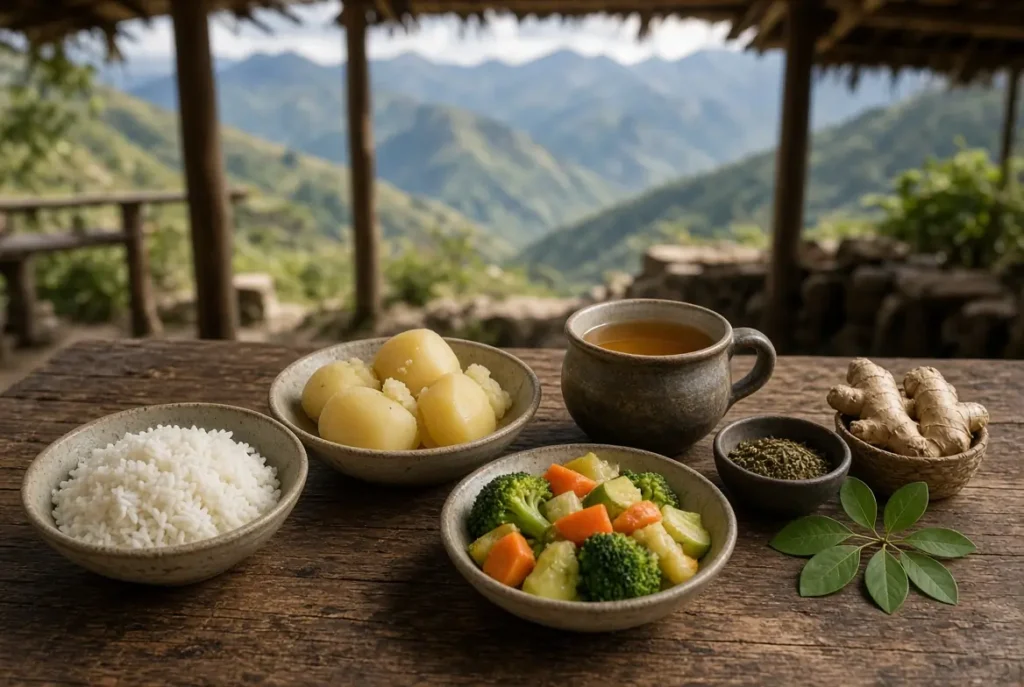
The Dieta, and the 2 Rules That Actually Matter
The dieta is the food and behaviour restriction you follow before, during and after a retreat. Most centers ask for 2 weeks either side: no pork or red meat, no alcohol, no recreational drugs, no aged cheese, no cured or fermented food, minimal caffeine, almost no salt or sugar or spice, and no sex for at least a week.
That list has a presentation problem. Delivered as one flat block, it makes the celibacy rule and the aged-cheese rule look equally serious. They aren’t.
Two items are pharmacology. The rest is preparation. Skip the fermented food and you take a real risk with an MAO inhibitor in your system. Skip the celibacy and you arrive less settled. Only one of those puts you in front of a doctor. A center that hands over the list without saying which is which hasn’t thought about why it exists, and the full preparation window deserves more than a PDF sent 2 weeks out.
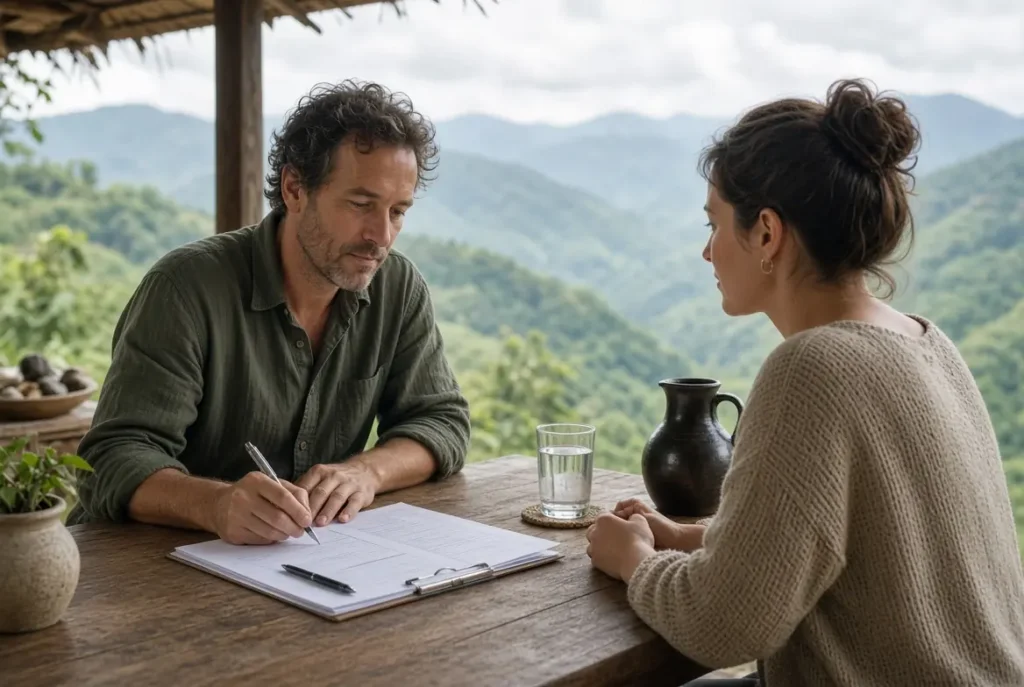
Is Your Intuition Enough to Pick a Safe Retreat?
No. I’ve read that advice in national magazines and it’s the most confidently wrong thing said about this industry.
The version goes: trust your gut, and if a place doesn’t feel right, walk away. The walking-away half is fine. The rest assumes you can read a healer’s competence off a website and a feeling. You can’t. Charisma reads as safety. A beautiful maloca reads as safety. Neither tells you who knows what to do when a guest stands up at 2 AM and heads for the door.
We had that night in March 2022. A guest with an undisclosed family psychiatric history went into acute distress and made for the doorway. At 3,100 metres, a disoriented person outside at 2 AM is a hypothermia problem stacked on a psychiatric one. It ended fine because a physician was on site and 2 staff stood between him and the cold. Intuition had nothing to do with it.
Ask these instead, in writing, before you pay a deposit.
- Name every healer who will be in the room, and how many years each has trained.
- How many guests per ceremony, and how many staff?
- Who reviews my medical form, and what are their credentials?
- What happens in a medical emergency, and how far is the hospital?
- What percentage of applicants do you turn away?
- What integration support exists after I leave, and for how long?
A center that answers all 6 with specifics has thought about them. One that answers in adjectives hasn’t. And page 1 of Google for “ayahuasca retreat” is mostly directories and paid placement, a function of how those rankings form rather than of which centers are safest.
One more thing, plainly. The pineal gland story, where ayahuasca activates DMT your brain is already making, is folklore. David Nichols took it apart in the Journal of Psychopharmacology in 2018, and a newer Neuropharmacology study by Palner and colleagues found no endogenous DMT in the adult rat brain, even with the degrading enzymes blocked. The medicine works. The third-eye explanation doesn’t, and what the research shows is more interesting than the myth.
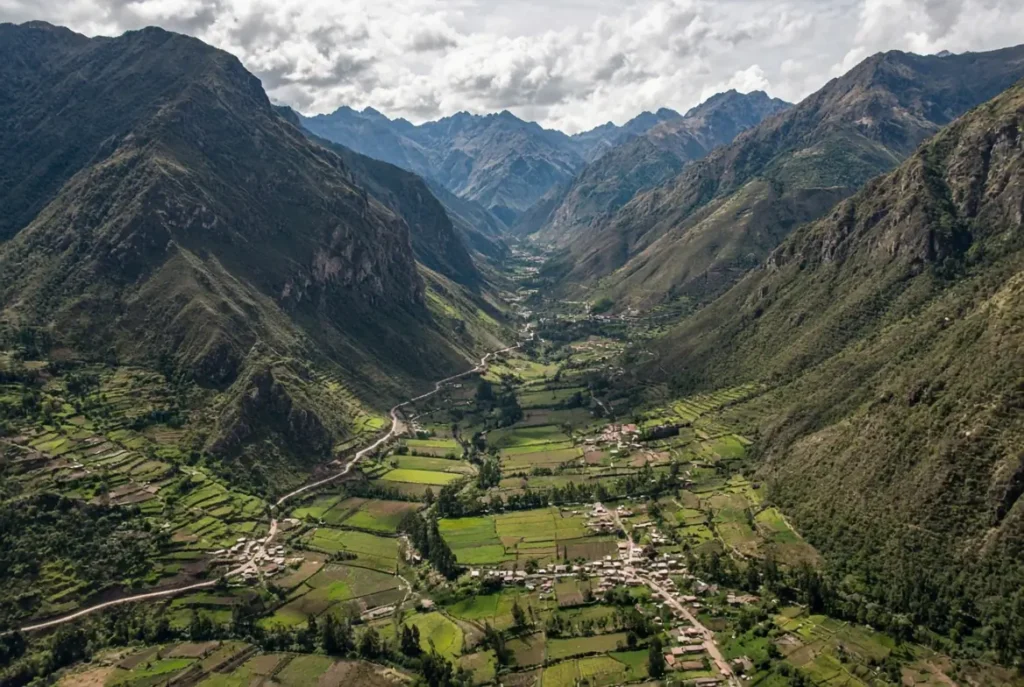
Amazon or Andes, and What Actually Changes
Most centers sit in the Amazon lowlands, and the industry treats the jungle as the default. That’s a habit, not a finding. The medicine is the vine, not the postcode.
| Amazon lowland center | Sacred Valley at 3,100m | |
|---|---|---|
| Getting there | Flight to a jungle city, then 1 to 3 hours by boat | 40-minute drive from Cusco airport |
| Nearest hospital | Often 1 to 2 hours, partly by river | About 45 minutes by road |
| Ceremony temperature | Warm and humid | 3 to 10 degrees Celsius |
| Light in the maloca | Total darkness | Ember glow, stars through the doorway |
| Main physical demand | Heat, insects, malaria risk | Altitude, cold |
| Vine source | Often grown on site | Trucked from the Ucayali, 24 to 30 hours by road |
Neither column wins. If you want the jungle, go. It’s the tradition’s home ground and I’d never argue anyone out of it.
Pick the mountains if road access matters, if a 45-minute hospital run changes your risk calculus, or if your time is short. If you have a respiratory condition or a history of severe altitude sickness, the Amazon is safer and any honest Andean center will say so.

What Happens When You Get Home?
Re-entry is harder than arrival. Airport noise, notifications and fluorescent light hit returning guests like a wall, and almost nobody prepares for it.
The ceremony isn’t the healing. It’s the opening. After 2,100 guests the pattern is boring in its consistency. People who hold onto what they found keep a daily practice, make 1 concrete change within 3 months, and stay connected to a therapist or a group. People who struggle go back to the same job and the same silence, then book another retreat instead of doing the work.
Our follow-up is fixed. A video call in week 1, another in week 3, then email check-ins at 2, 6 and 12 months. About 85% of guests take the week 1 call. What happens in the first month back tends to set the tone for the year, and what people report a year later looks different from what they say on the last morning.
The One Thing to Take From This
Knowing what to expect at an ayahuasca retreat is mostly about the boring parts. The clock, the cold, the taper, the 2 days of acclimatizing before anything happens. Get those right and the ceremony has a fair chance of doing its work. Get them wrong and you’ll spend your first night fighting your own body instead of meeting the medicine.
Our 11-day retreat above Pisac runs 4 ceremonies with 12 guests, 3 healers and 2 facilitators. If you’re building a longer trip around it, fitting in Machu Picchu takes more planning than most people budget for.
Frequently Asked Questions
What should I expect at an ayahuasca retreat if it’s my first time?
Expect structure before intensity. A first-time guest spends 2 full days acclimatizing before the first ceremony on night 3, eats a plain restricted diet throughout, and sits 4 ceremonies over 11 days. First doses are conservative, usually 35 to 55ml, and purging is common rather than a sign something went wrong.
How long does an ayahuasca ceremony last?
Most ayahuasca ceremonies run 5 to 7 hours. Ours start at 7:15 PM when guests take their mats and close at 3:00 AM with an Andean despacho offering, followed by 30 minutes of rest, tea and light food.
Do you have to stop taking antidepressants before an ayahuasca retreat?
Yes, and the taper has to be supervised by your prescribing physician. Standard washout is 6 weeks for most SSRIs and SNRIs, and 8 weeks for fluoxetine because of its longer half-life. Callaway and Grob warned in the Journal of Psychoactive Drugs in 1998 that combining ayahuasca’s harmala alkaloids with serotonin reuptake inhibitors can trigger serotonin syndrome. Lithium and pharmaceutical MAOIs are absolute contraindications with no safe taper.
What should I expect at an ayahuasca retreat at high altitude?
Expect the altitude to be a factor before the medicine is. Acute mountain sickness affects 25% to 43% of people ascending to between 2,500 and 4,300 metres, and our center sits at roughly 3,100 metres. Ceremony temperatures inside the maloca run 3 to 10 degrees Celsius, and guests need at least 36 hours in the Sacred Valley before the retreat starts.
How many ceremonies should a retreat include?
Fewer than the industry standard. Many centers run 5 to 7 in a single week, driven by what customers expect rather than what helps. We run 4 across 11 days, on nights 3, 5, 8 and 10, with a deliberate 2-day gap so the body settles between sittings.
Is ayahuasca legal in Peru?
Yes. Peru declared traditional ayahuasca use National Cultural Patrimony in 2008 under Resolución Directoral Nacional 836/INC, and filed a specific reservation for ayahuasca when it signed the 1971 Convention on Psychotropic Substances, as ICEERS records in its country legal briefing. Guests attending a ceremony in Peru face no legal risk. Retreat centers themselves are not licensed or inspected by any government body, which is exactly why the screening questions above matter.
Will I throw up?
Probably, and it isn’t a complication. Most guests purge at some point, usually 45 minutes to an hour after drinking. At 3,100 metres it’s more physically demanding than at sea level because you’re already working harder to breathe. That’s one reason we serve conservative first doses.
Pisac Ayahuasca Retreats makes no medical claims. Ayahuasca is not a treatment for any condition and may not be brought into the United States. Every place is confirmed only after physician review.